| By Zahra Hirji and Olivia Rudgard For the many Americans who dug into Thanksgiving dinner on Thursday, the centerpiece on the table was roast turkey. Yet the custom of focusing a celebratory meal on a decadent meat dish isn't unique to a bird-based American holiday — it's commonplace across the feasts for Christmas, Easter, the end of Ramadan for Eid al-Fitr, Passover and Lunar New Year. "Meat is really intimately tied with a lot of traditions and festivities," says Emma Garnett, a postdoctoral researcher who studies behavior change and sustainable diets at the University of Oxford. And even outside belly-busting holiday meals, she says, meat eating has become excessive. In industrialized countries like the US, people often consume far more meat than dietary guidelines recommend. Scientific data now overwhelmingly shows this is not only bad for people's health — but also the planet. "Food systems are responsible for a third of global greenhouse gas emissions, which is huge," says Stacy Blondin, a behavioral science associate at World Resources Institute. Moreover, it's the production, transportation and consumption of animal-based foods specifically that are the dominant source of food-related emissions. Some of the highest-emission foods come from cows and other ruminant animals, which roam across acres of land emitting methane, a potent greenhouse gas, during their unique digestion process. Compared to plant-based proteins including beans and legumes, for example, beef is responsible for some 20 times more emissions per edible gram of protein. 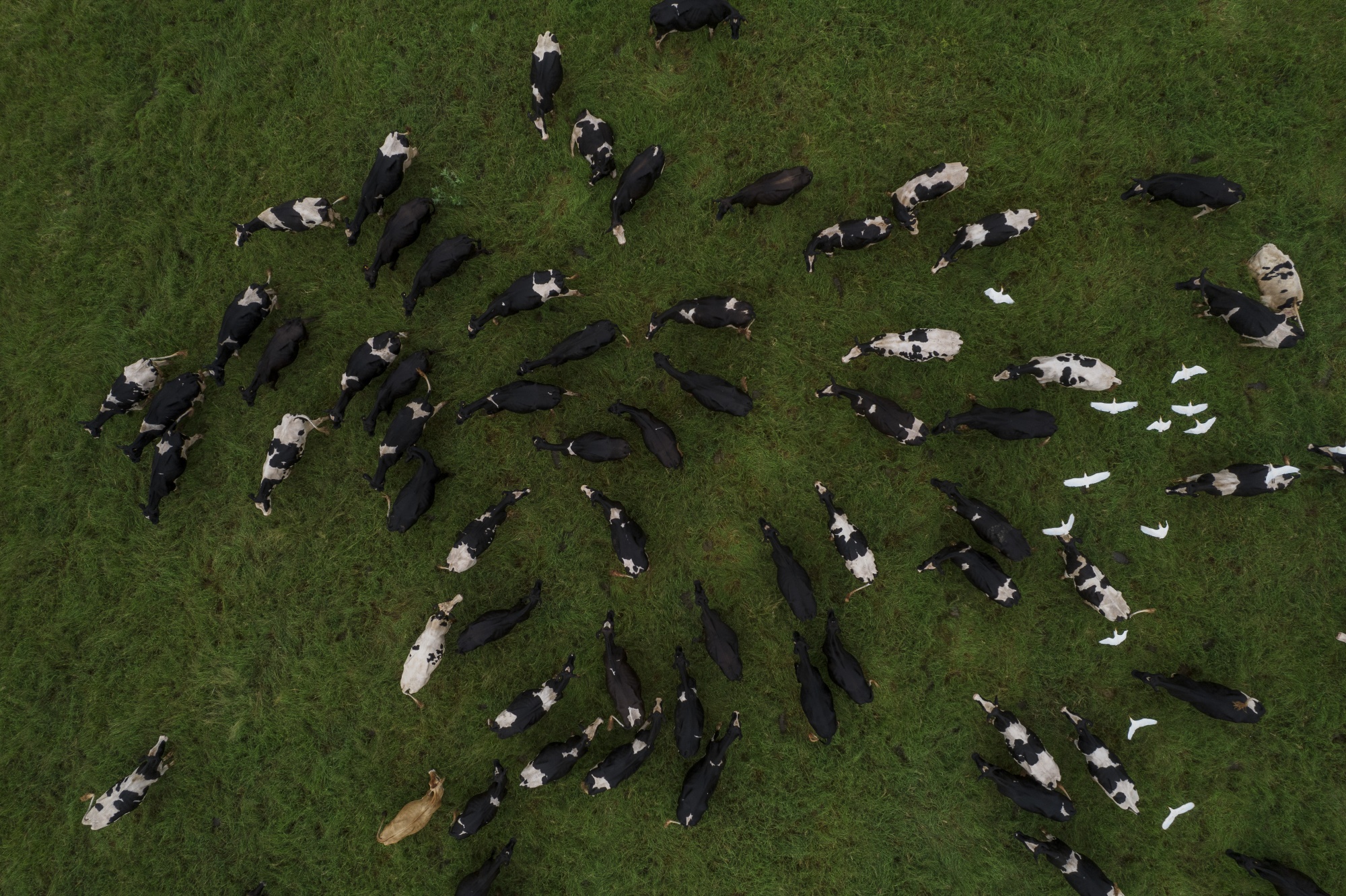 Cows graze on the Annoni farm in Pontao, Brazil. Photographer: Victor Moriyama/Bloomberg This means shifting diets at scale away from meat-centric meals to plant-based ones could dramatically cut greenhouse gas emissions. According to a study published in Nature Climate Change in August, if the entire world were to adopt a diet consisting mostly of plants, current annual global dietary emission levels would drop about 17% compared to 2019 levels. But getting people to change what they eat isn't easy. A lot of emotion and personal identity is wrapped up in food. There also can be stigma attached to people who don't eat much meat, as well as misinformation about plant-based diets, such as false claims that they can't provide enough protein or that soy can feminize men. There's been an explosion of research and experimentation to figure out what can get people to make this shift. Here are several strategies that are already making a difference. Nudges toward greener food Just giving plant-based meals premium visibility and marketing on shelves, tables and menus can make a big difference. It's one of several popular techniques embraced by members of the Menus of Change University Research Collaborative. Of the coalition, 33 participating institutions promoting plant-forward meals in campus dining halls recorded a collective 23% decrease in greenhouse gas emissions per kilogram of food purchased between 2019 and 2023. Now the group is aiming higher: to cut emissions per kilogram of food by 40% by 2030. Some restaurants have also tweaked menus so that plant-based options come first or are highlighted as a "chef's special" or "dish of the day." Meanwhile some eateries have offered discounts or promotions on plant-forward meals, or they've used more indulgent language to describe plant dishes. 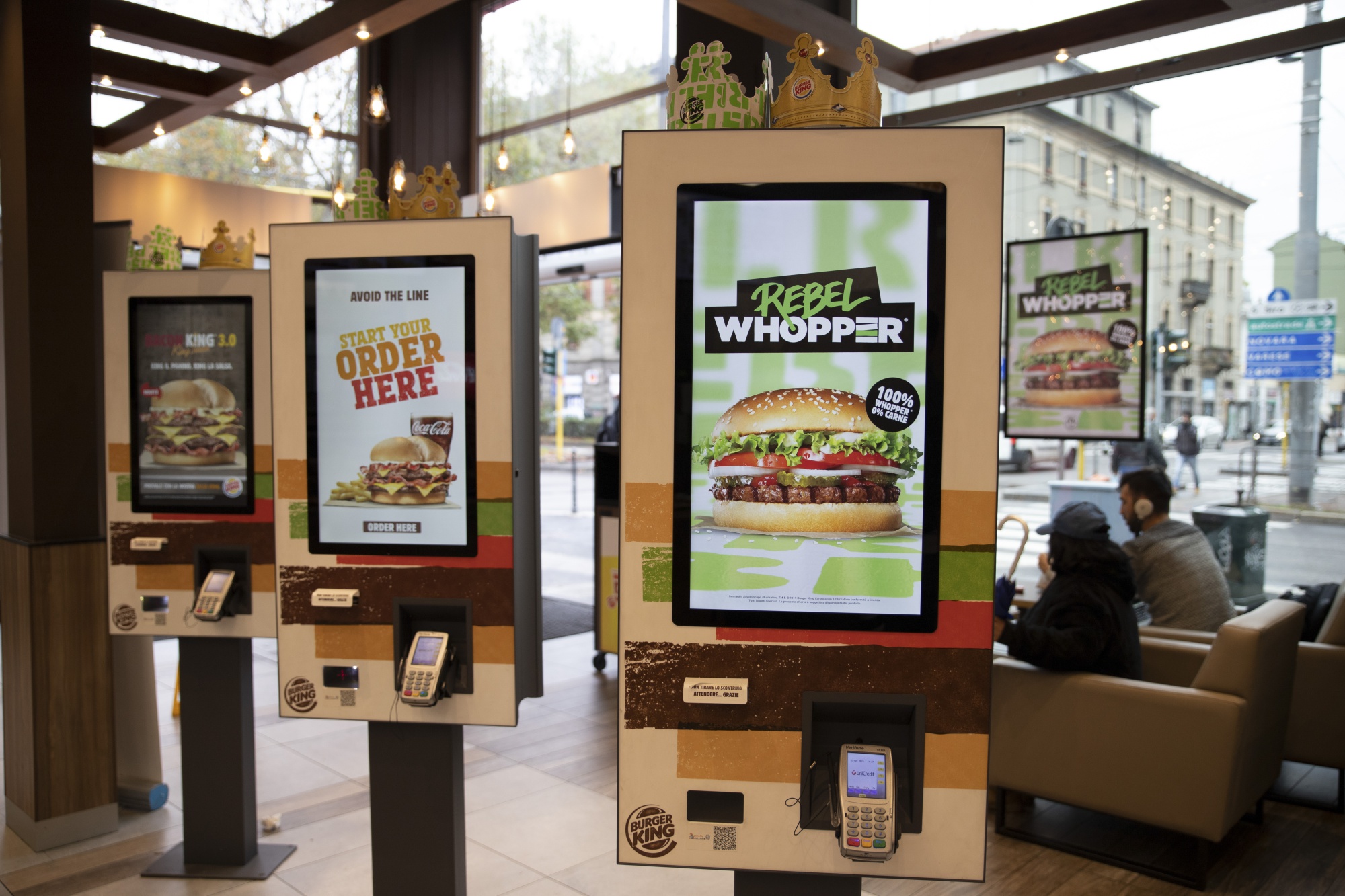 An advert for the meat-free Rebel Whopper burger displayed on a digital order kiosk at a Burger King in Milan, Italy in 2019. Photographer: Camilla Cerea/Bloomberg Google, for instance, said that renaming some of the plant-based dishes in their employee cafés to descriptions like "Wine Simmered French Vegetable Medley Soup" led to a significant rise in their uptake. Read More: The Invisible Power of 'Nudging' Is Leading Diners to Cut Back on Meat These unconscious processes drive much more of our behavior than conscious reasoning, says Kris De Meyer, a neuroscientist and director of the UCL Climate Action Unit. "If our surroundings change, then our behavior changes as a consequence of that," he says. Meat-free days One of the most well-known approaches to getting people to cut down their meat consumption is introducing special days or even months to cut it out of a person's diet. Veganuary, a campaign started by a UK nonprofit to encourage people to go vegan for the month of January, has seen a growing number of sign-ups since it began a decade ago. It's clever because it wields the month of the year when people are most likely to be open to overhauling their lifestyle in the interests of health, according to a study by the University of Bath. One study of "meat-free Monday" participants found that one in five became vegetarian or vegan within five years. 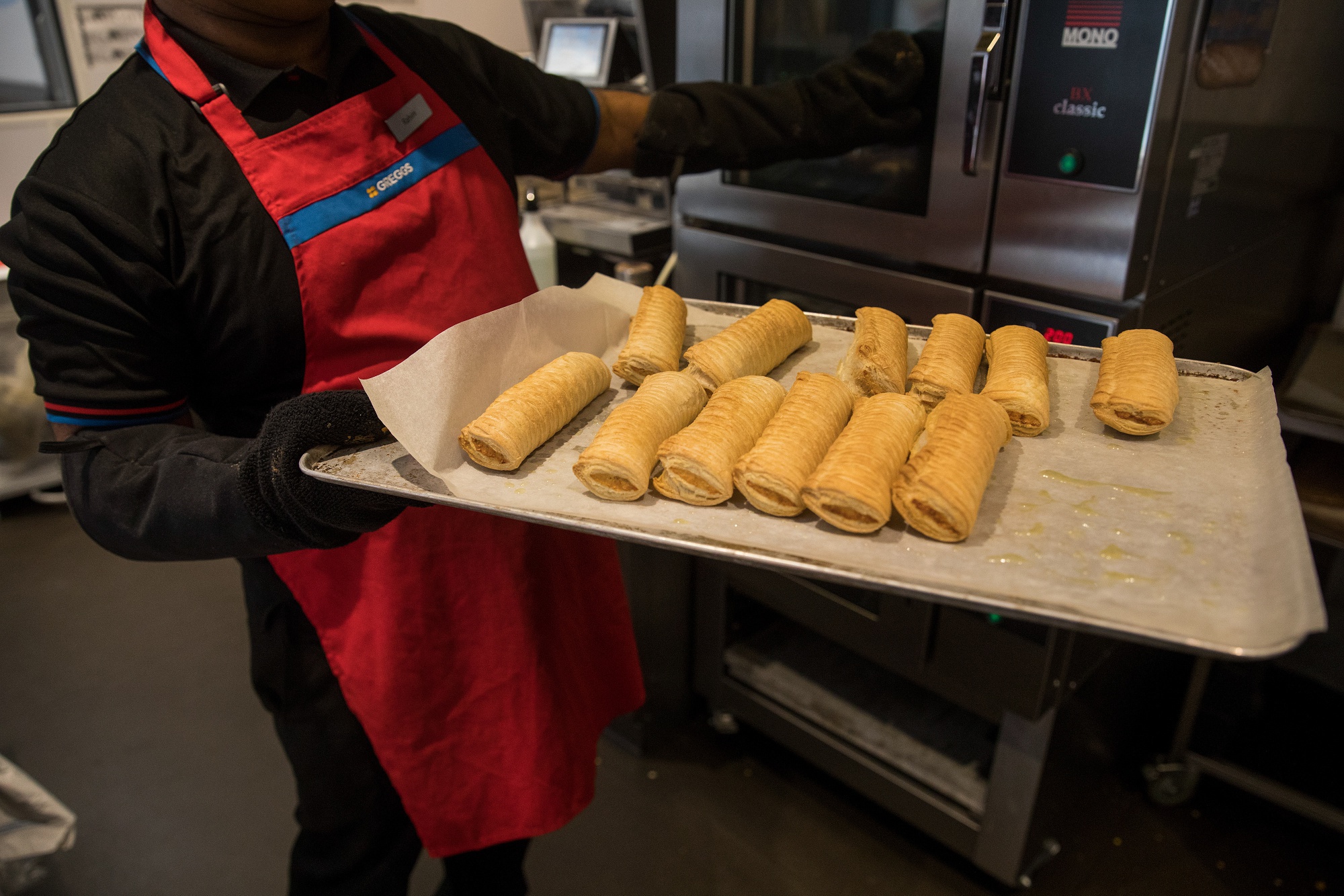 An employee holds a tray of freshly baked vegan sausage rolls at a Greggs Plc sandwich chain outlet in London in 2019. Photographer: Simon Dawson/Bloomberg Veganuary's success may also be down to the positive social pressure created by the knowledge that thousands of other people are also cutting out meat and dairy for the month. Still, there are some limitations. Trying to convince people to go vegan solely for environmental reasons could backfire, or be seen as too preachy. "You will turn people off with that kind of argumentation, and you'll push them away," says De Meyer. Just eat less There's a chance some people may already be eating less meat without knowing it. Some dining halls, restaurants and marketplaces are using blending techniques — making meatballs or burgers out of a mix of minced meat and vegetables. In various lab and dining hall experiments, where diners have had to rate the taste of the blended meals, often times people said the dishes were "like equal if not better" than classic meat-only versions, says WRI's Blondin. "That's one of the few techniques that actually promotes the maintenance of meat, while kind of sneaking in plant-rich ingredients." In the UK, meat consumption rates are already falling among certain groups due to people simply cutting their meal portion sizes, according to a recent study published in the journal Nature Food. The amount of meat eaten by Britons fell by more than 15% between 2008 and 2019, the study found. The broader reasons for this shift in the UK are unclear. Yet the paper's lead author, Alexander Vonderschmidt, a dietitian, and a PhD student at University of Edinburgh, suggested that it could be a mix of things, including the rising cost of living, health concerns and worry about the environment. Make plants taste good Finally, the best way to encourage greener eating is to have plant-forward food taste at least as good as meat-based options. Denmark this year launched an ambitious $100 million plan to increase the availability of tasty plant-based food across the country by sponsoring initiatives such as a vegetarian chef degree program. It's also backing a number of other programs to reduce Danes' meat consumption through various nudging experiments. Read More: How Denmark Is Nudging the Nation to Cut Back on Meat 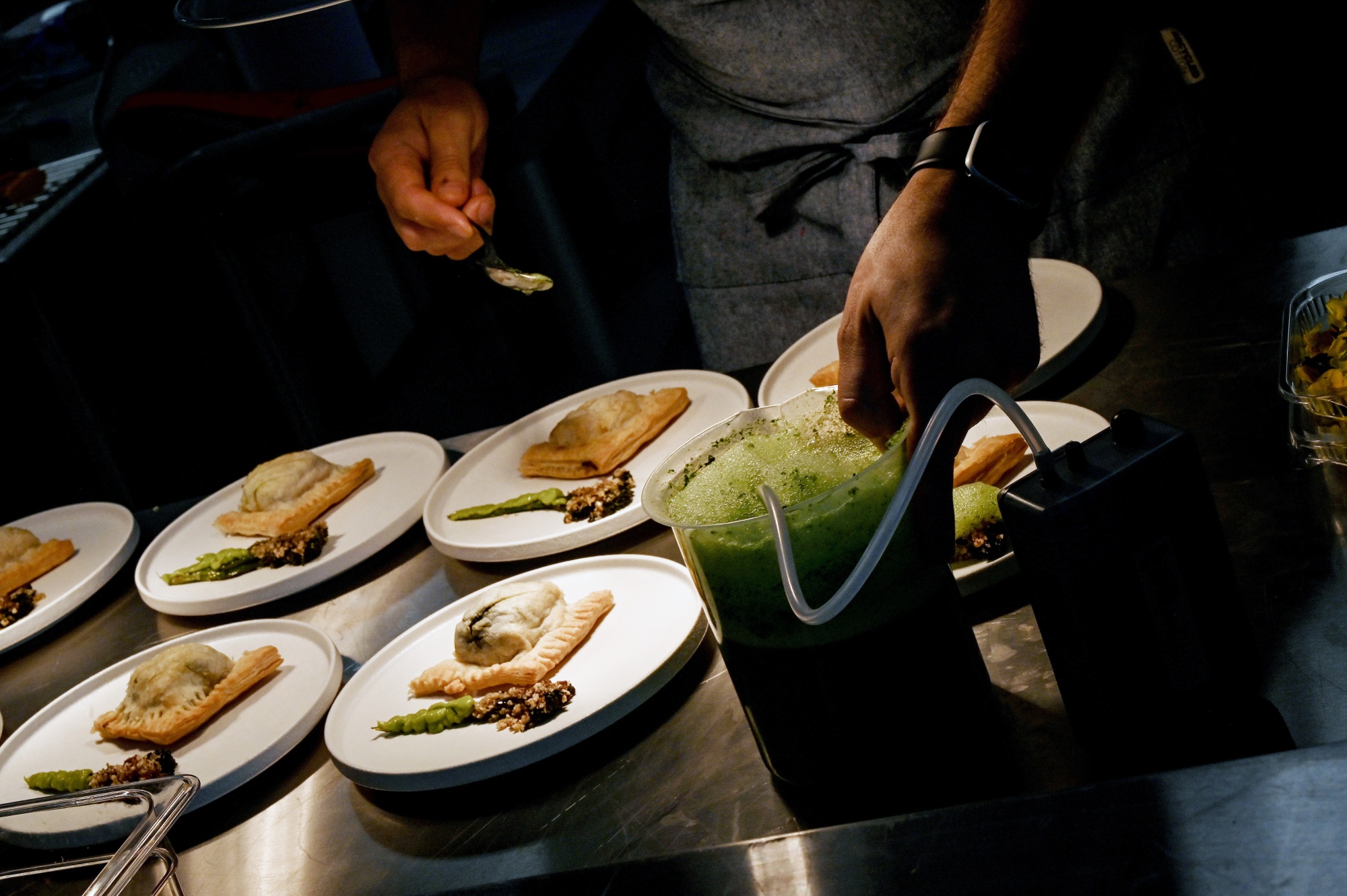 A chef plates a plant-based dish for guests during a tasting session at the Archer-Daniels-Midland Co. Innovation Food Lab in Manchester, UK. Photographer: Mary Turner/Bloomberg In the US, the Menus of Change University Research Collaborative is crowdsourcing "culinary techniques, menu concepts, recipes" and more from chefs across participating institutions to improve the flavor of plant-based food, says Sophie Egan, the group's co-director. Relatedly, the Culinary Institute of America offers a 19-course, online Plant-Forward Kitchen Training and Certification program for food service staff on how to prepare hearty — and delicious — plant-based dishes. "If the food doesn't taste good," says Blondin, "no matter how much you discount it or promote it or place it in people's faces, they're not going to want to eat it." Like getting the Green Daily? Subscribe to Bloomberg.com for unlimited access to breaking news on climate and energy, data-driven reporting and graphics. | 








No comments:
Post a Comment