- US labor costs rose by the most in a year in the first quarter, a sign of wage pressures that are keeping inflation up.
- Walmart will close its 51 health centers and telehealth business, abandoning its plan to build a network of low-cost health clinics.
- Interest rates haven't come down, but for savvy investors, crises present opportunities. Here's where to invest in real estate right now.
I've been watching the events at Columbia University the past few weeks with a sense of déjà vu. I was the editor of the student newspaper, the Columbia Daily Spectator, in the spring of 1968. Fifty-six years ago, on April 30, the administration there called in the New York Police Department to break up a student protest that had shut down the campus. That only made things worse. More than 700 students were arrested, dozens were injured, and many more were radicalized by the display of excessive police force. Another building was occupied, the rest of the spring term was canceled, and the university president at the time, Grayson Kirk, was forced to resign. Now we're seeing the same counterproductive playbook dusted off: the suspension of student groups, the outlawing of campus protests, the police called on campus to make arrests. On Monday, tensions escalated as the university began suspending students who refused to leave a tent encampment on South Lawn and, early Tuesday morning, some protesters occupied a classroom building. 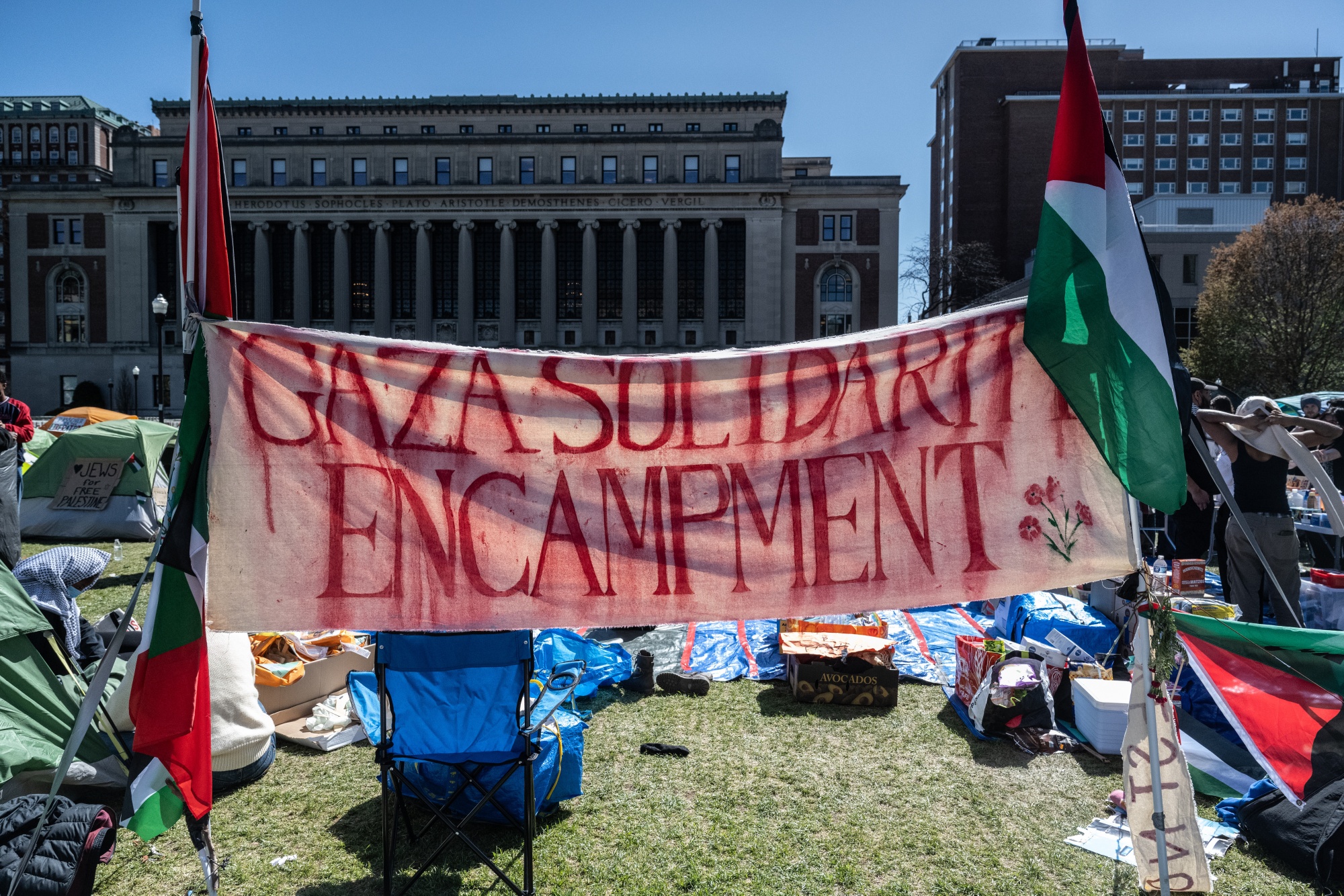 Pro-Palestinian demonstrators at the South Lawn encampment at Columbia last week. Photographer: Stephanie Keith/Bloomberg There are differences, of course. Then, it was Vietnam; now it's Gaza. Then, five buildings were occupied; now, protesters focused on a tent encampment before moving indoors. Then, the president was an out-of-touch establishment figurehead; now, she's the first woman to lead the university. Then, some students were accused of being left-wing fanatics; now some are being called antisemitic. But it's the similarities that are most striking. Once again, students are speaking out against what they see as a grave injustice–in this case, the deaths of more than 30,000 Palestinians as Israel wages a war against Hamas. Once again, a protest that began at Columbia is sparking a national movement. And once again, the administration is flailing. I spent a mostly sleepless week that April in 1968 reporting and writing about what was going on in the occupied buildings, watching as university administrators issued ultimatums and faculty members tried in vain to negotiate a settlement. Outside Low Library, where protesters were camped out in the president's office, a group of students who called themselves the Majority Coalition stood shoulder to shoulder to block food from entering the building. It wasn't until months later, after Columbia dealt with the issues underlying the protests–severing its involvement with a research institute that had ties to the Vietnam War and canceling the construction of a gym in a public park in Harlem–that the long healing process began. Now, 56 years later, those wounds have reopened, and the administration is making the same mistakes. President Minouche Shafik is under a lot of pressure from politicians on both sides of the aisle as well as big donors, like Robert Kraft, to make the student encampments just go away. But trying to stifle protest only incites more protest. Pro-Palestinian actions have since broken out at dozens of other US campuses. Not all have led to arrests; at the University of California at Berkeley, a campus known for its fiery history of student activism, the administration has taken a more wait-and-see approach. As my successors at the Spectator wrote last week, taking Shafik to task for calling in the police: "Your administration has proven, not only to your students, but to the world, that Columbia hasn't learned from the past." —Robert Friedman, Bloomberg News | 







No comments:
Post a Comment