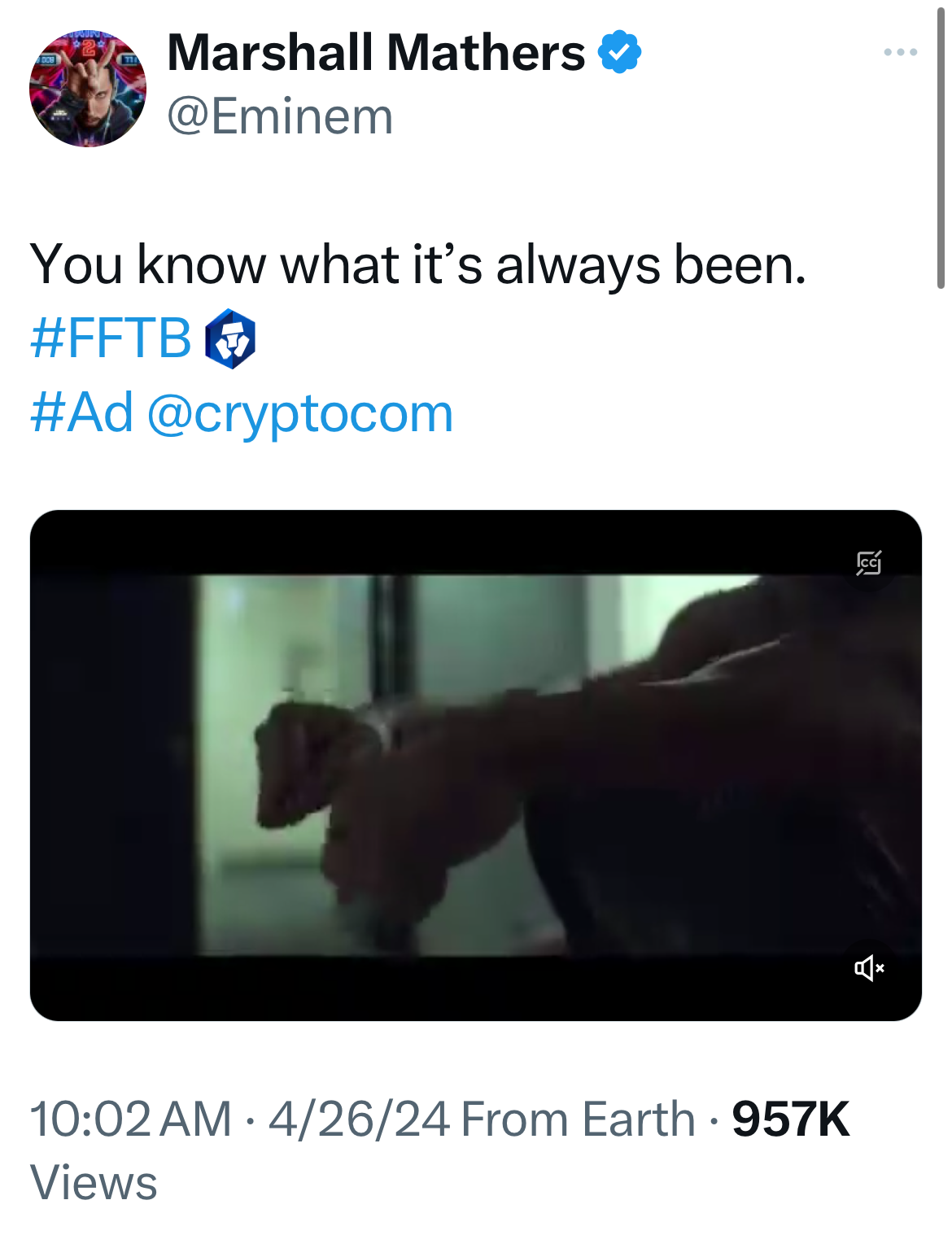
| It is sort of fitting that Slim Shady is now promoting crypto. The rapper Eminem narrated an ad for the Crypto.com exchange and tweeted it to his 22.1 million X followers before it premiered on TV Saturday during an NBA Playoffs game (held at the Crypto.com Arena, naturally.) It's a sign of a dramatic shift in the crypto industry's marketing and advertising efforts, which had been on the down low after celebrities like former quarterback Tom Brady got burned for representing FTX. After the fall of FTX, ad spending dried up and celebrities distanced themselves from crypto brands. Brady removed the laser eyes that signified support for Bitcoin from his X profile. FTX Arena was renamed after the security-management company Kaseya. But that was then, before crypto rallied with the introduction of US spot-Bitcoin exchange-traded funds. Now mom-and-pop investors are back, failures of the past are all but forgotten, Binance's former CEO Changpeng "CZ" Zhao got only four months in prison — and aggressive crypto marketing is back in full force. US digital spending by crypto advertisers rose more than 185% year-over-year in the first quarter, according to estimates from market intelligence firm Sensor Tower prepared for Bloomberg. The biggest US crypto exchange, Coinbase Global Inc., which is reporting earnings this week, expected sales and marketing expenses between $85 million and $100 million in the quarter, up from $64 million in the same period last year. The company also debuted a new ad at the NBA Playoffs. Even BlackRock, the world's largest asset manager and issuer of one of the new Bitcoin funds, ran an ad announcing "Bitcoin ETFs have landed." Naturally, memecoins are getting into the act. Dogwifhat's promoters recently raised $700,000 to put its logo on the Las Vegas Sphere — a move that resulted in a price jump, providing evidence that crypto advertising is working again. "So which memecoins do well? The ones that people think will consume the most attention," Paul Veradittakit of Pantera Capital wrote recently. Interestingly, where crypto companies buy digital ads has changed dramatically. At 43%, YouTube received the largest share of US crypto-ad spending in the first quarter, up from 11% in the year-ago quarter, Sensor Tower said. Facebook represented the largest advertising channel for US crypto advertisers in the year-ago period with a 37% share, yet that declined to 4% in the latest quarter.
"Crypto platforms could be trying to reach a younger demographic of users," said Abraham Yousef, a Sensor Tower analyst. About 26% of YouTube users in the US were between 18 and 24 years old in the first quarter, versus 14% on Facebook. How will it all end? Likely the same way as before: When the crypto market enters another big downturn, marketing spending will dry up once more. Some companies will blow up. Celebrities will swear off crypto. Until the next bull market, that is. | 





No comments:
Post a Comment