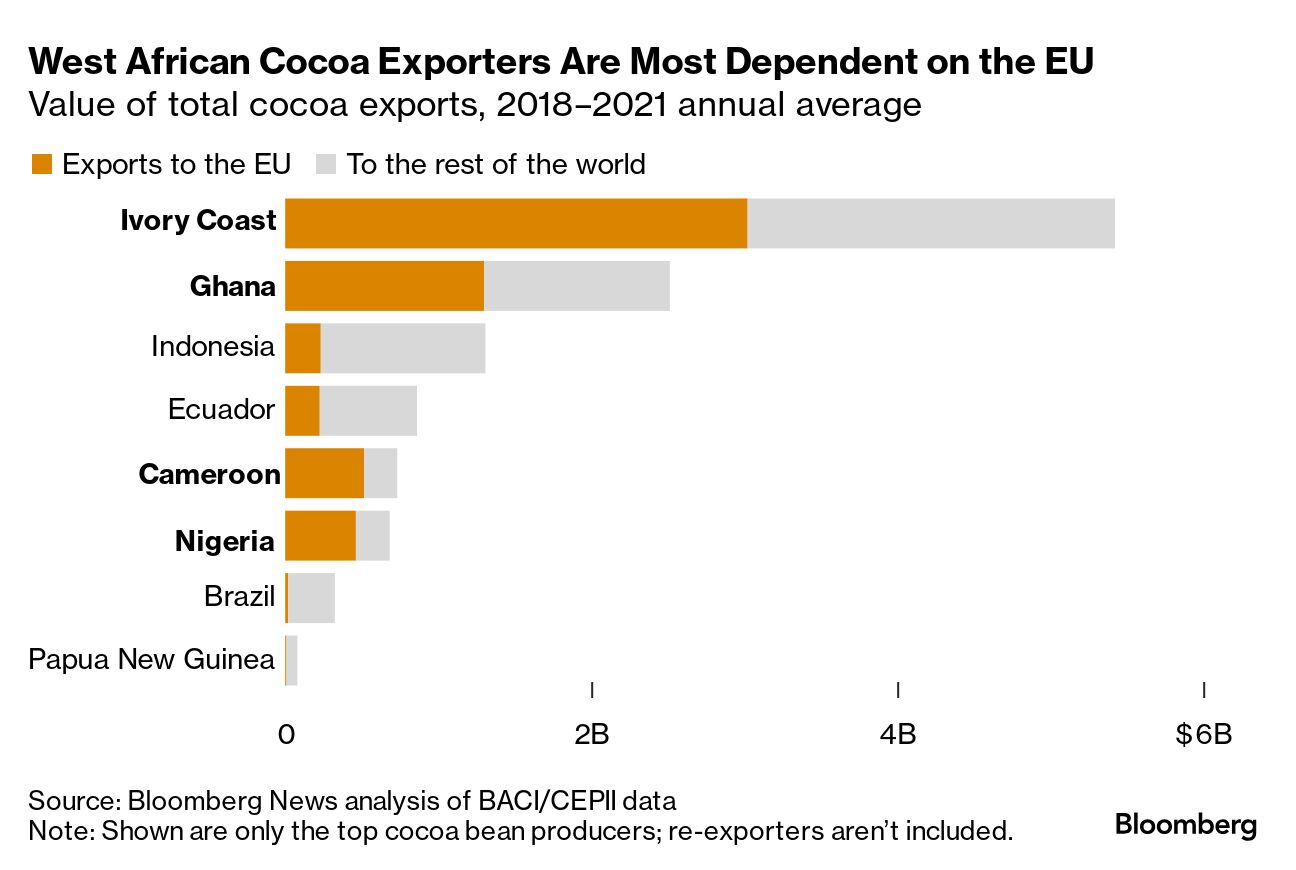
| Get ready to pay more for chocolate, find smaller bars on store shelves or buy new treats with no cocoa at all. They're among possible repercussions of cocoa's surge to a record-high price after bad weather and crop disease ravaged harvests in West Africa. The cost of beans has more than doubled in the past year and there doesn't look to be much chance of a respite any time soon. Major chocolatier Barry Callebaut this week warned that acute cocoa shortages will persist into next season. 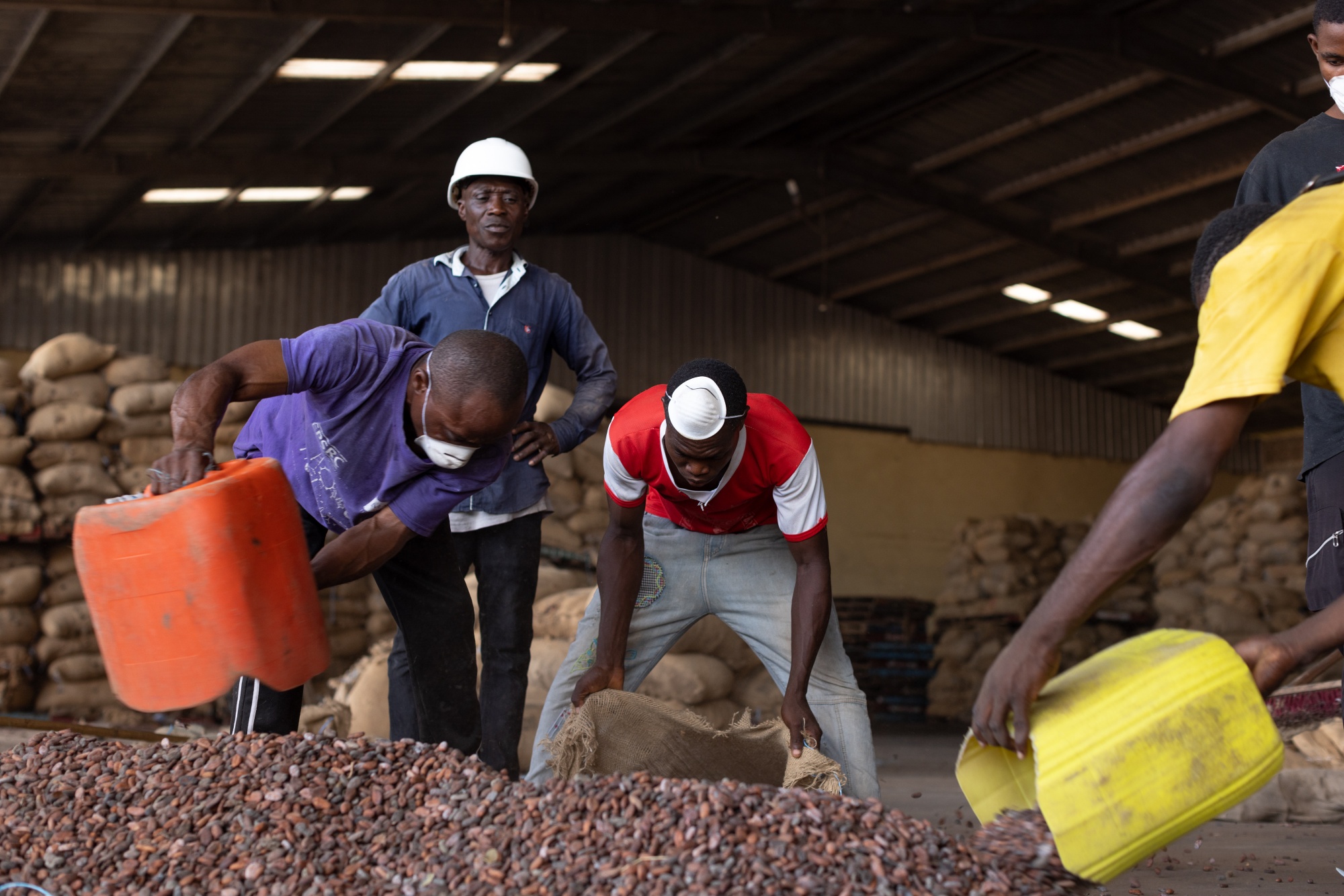 Cocoa beans are collected at a rebagging facility. Photographer: Paul Ninson What Does the Rally Mean for Consumers? To cope with the increased cost, chocolate manufacturers could raise prices. But faced with limited room for more hikes, companies are resorting to measures including promoting products with less cocoa — like hazelnut-flavor bars, or a partial dip of chocolate instead of a full coating. Some cocoa butter is also being replaced with cheaper substitutes such as palm oil. There's also the risk to demand. Consumers are most likely to cut back on chocolate and candy if inflation continues, behind only alcohol and makeup, according to a survey from September by consumer intelligence company NIQ. Another Supply Headache From the end of this year, the European Union will require companies to prove all the cocoa they import to the continent hasn't contributed to deforestation where it was grown. That means tracing bean from pod to port — not an easy task for the complex cocoa supply chain, particularly in places like Africa. Cocoa changes hands multiple times during its journey to the EU and there are concerns the industry won't be able to track all supplies by the time the rules kick in. The looming deforestation regulation also covers palm oil, coffee, soy, timber and cattle. —Nicholas Larkin in London | 







No comments:
Post a Comment