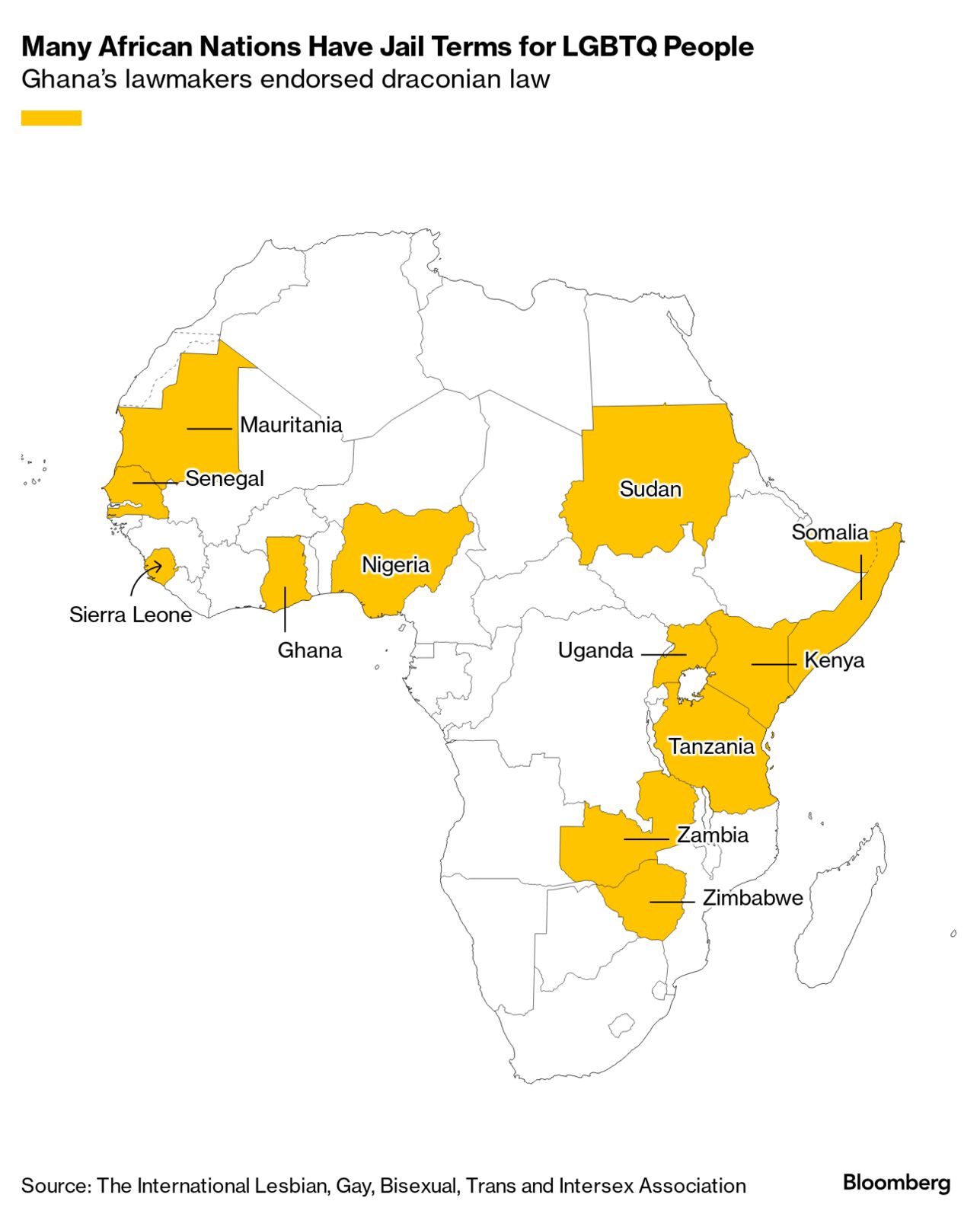
| Welcome to Next Africa, a twice-weekly newsletter on where the continent stands now — and where it's headed. Sign up here to have it delivered to your email. For years, Ghana's parliament kicked around a proposed law seeking jail time for LGBTQ people. Now, as elections approach, it may have scored a costly own goal. Lawmakers passed the Human Sexual Rights and Family Values Bill this week, which would punish homosexuality with up to three years in prison. The ruling party and opposition have frequent partisan blowouts in the hung parliament on issues ranging from taxes to allowing the president to speak in the house. Yet, this bill drew consensus even though its constitutionality is being challenged. The lawmakers argue it's needed to preserve cultural and religious values. 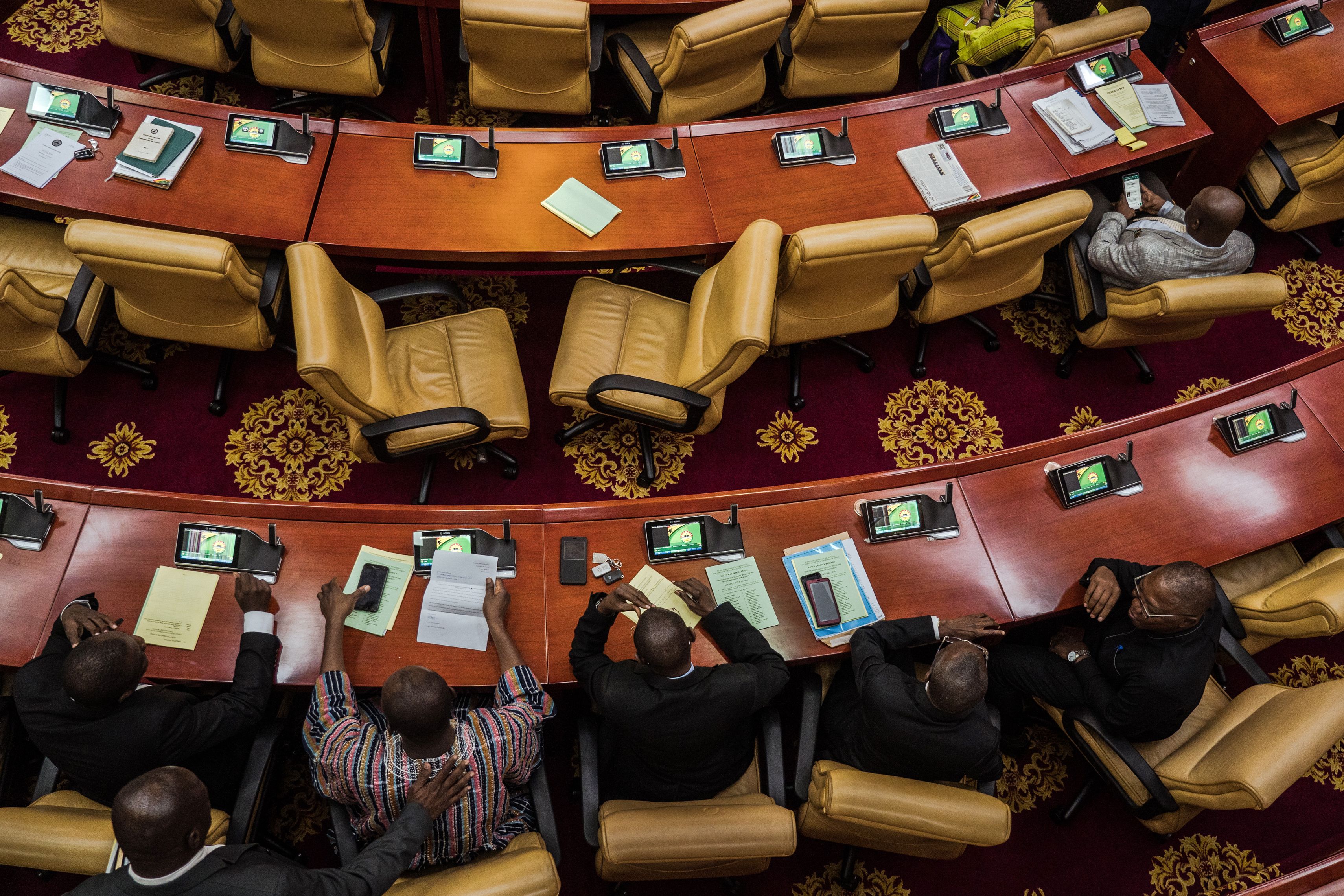 Lawmakers in Ghana's parliament in July 2019. Photographer: Natalija Gormalova/AFP/Getty Images That may play to a broad section of the domestic audience ahead of elections this year, but will likely unsettle the lenders that are propping up the West African nation's economy. Once considered an investor darling, Ghana has defaulted on its debt. It secured a $3 billion International Monetary Fund program and expects to receive at least $900 million in financing from the World Bank — the very institution that halted new funding to Uganda after President Yoweri Museveni approved similar legislation. "We are watching recent developments in Ghana closely," the IMF said, stressing that its policies prohibit discrimination. "Diversity and inclusion are values that the IMF embraces." The next step is up to outgoing president, Nana Akufo-Addo. He's said he would sign the measure into law if that was the wish of the majority of the people. Former President John Mahama, who's competing for the top job against current deputy leader, Mahamudu Bawumia, told a gathering that homosexuality goes against his religious beliefs. He didn't say if he would approve the legislation. The law will force people to report anyone who's gay to the authorities, erode personal freedoms and scour the nation's democratic fabric if it is approved. There's much at stake in signing off on this bill. — Yinka Ibukun Key stories and opinion:
Ghana Joins Africa Nations Seeking Jail for LGBTQ People
IMF Watching Events in Ghana After Passage of Anti-LGBTQ Bill
Burundi Says LGBTQ Unacceptable, Shuns Rights-Linked Foreign Aid
Why Uganda's LGBTQ Community Is Under Renewed Fire: QuickTake
World Bank Halts New Funding to Uganda Over Anti-LGBTQ Laws Click here to watch the latest edition of Africa Amplified, Bloomberg TV's monthly show focused exclusively on the continent. Senegalese President Macky Sall reiterated he will step down when his term expires on April 2, appearing to reject a proposal that he stay on until presidential elections. The move may alleviate some of the tension built up since he canceled a vote set for Feb. 25, sparking street protests and a government crackdown. Sall said he won't decide on a national commission's proposal that the election be held on June 2 — which opposition candidates have rejected as too late — until next week, leaving the country in limbo. Listen to our X Spaces discussion on upcoming votes in Africa. 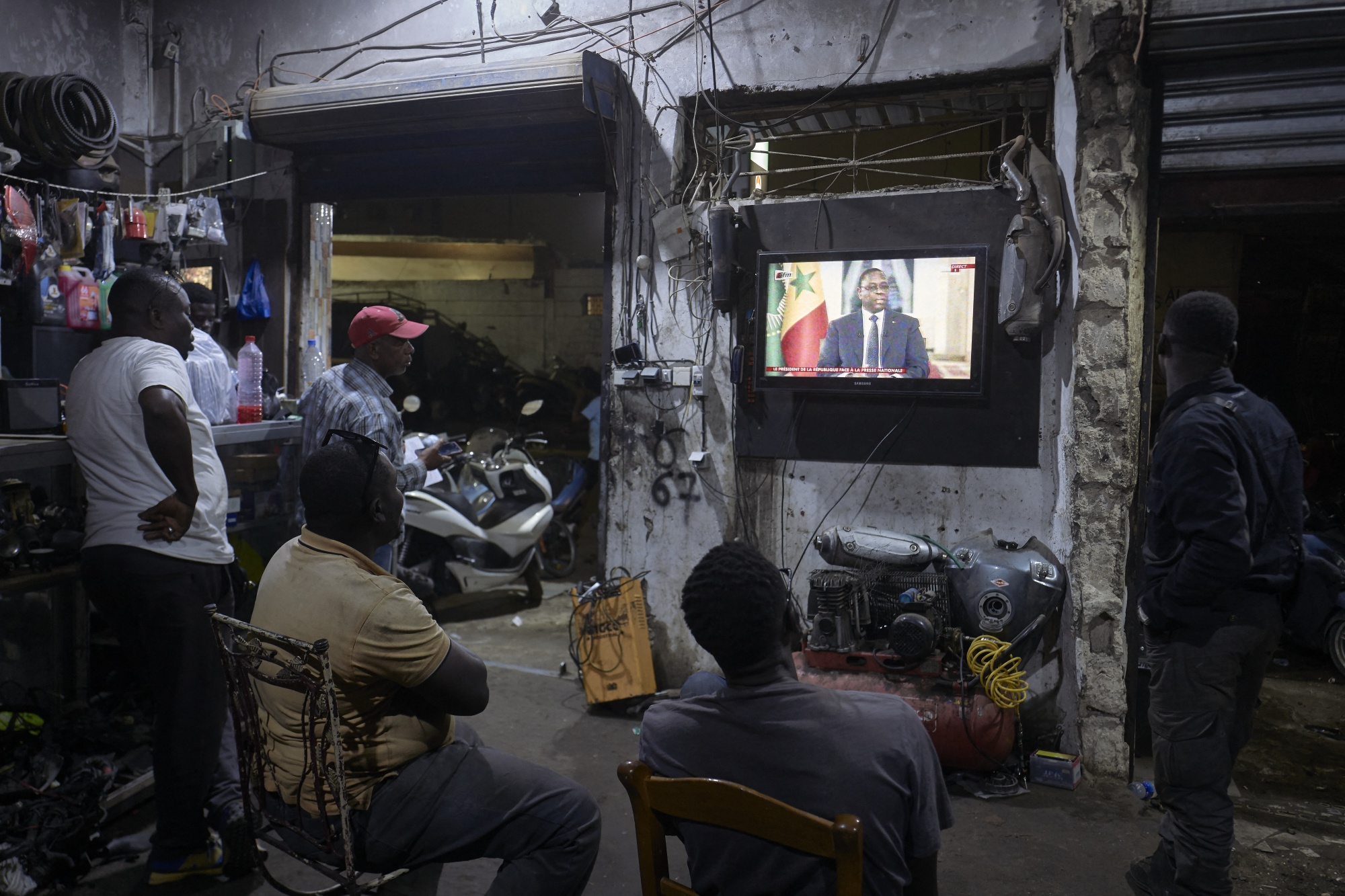 People in Medina, Senegal, watch a televised press briefing by Sall on Feb. 22. Photographer: Michele Cattani/AFP/Getty Images Nigerian authorities detained two Binance executives, days after the central bank governor said the nation is losing out on taxes from unregistered crypto exchanges. The pair were taken in for questioning on the grounds that Binance operates illegally in Nigeria, sources say, even though they had been invited to the West African nation to meet officials after the government blocked access to cryptocurrency platforms. Separately, here's an interview with billionaire Christo Wiese on why a corporate exodus won't last and an opinion piece from columnist Ken Opalo on Nigeria's currency woes. Lenders to TotalEnergies' Mozambique gas project are weighing the release of billions of dollars in funding as the company prepares to resume construction three years after Islamist insurgent attacks halted development. The planned facility to export the southern African nation's major gas discoveries attracted the biggest project financing yet seen on the continent. That was before Islamic State-linked militants staged attacks near the site in 2021, prompting the deployment of Rwandan troops and soldiers from a regional bloc to secure the area. 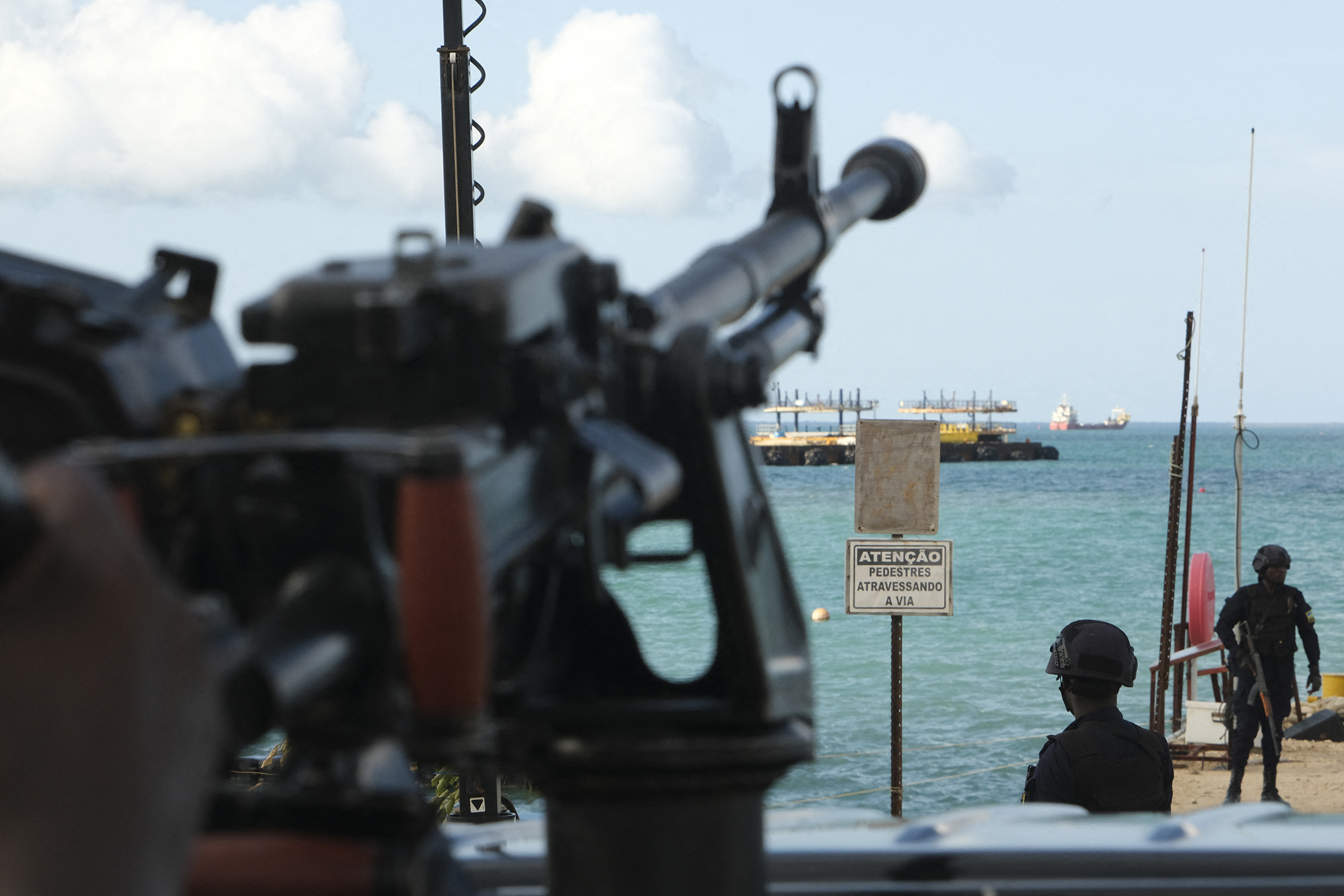 Rwandan soldiers near the TotalEnergies site in Afungi in 2022. Photographer: Camille Laffont/AFP/Getty Images India and Mauritius inaugurated a new airstrip and jetty on the remote Indian Ocean islands of Agalega, boosting military infrastructure in a region marked by increasing piracy attempts and forays by Chinese warships. The new facilities on the Mauritius-controlled islands will allow Indian warships to refuel and its aircraft to land. Maldives recently ordered the Indian military to leave its territory and remove its helicopters and a radar chain used for monitoring commercial ships. Chad's opposition leader Yaya Dillo was killed a day after a date was set for presidential elections that should return the country to democracy. Dillo died leading an assault on the internal-security agency's offices alongside several members of his Parti Socialiste sans Frontieres, public prosecutor Oumar Kedelaye said. Clashes erupted in the capital, N'Djamena, on Wednesday after the government accused the PSF of an attack. The country is due to hold elections on May 6, three years after General Mahamat Deby seized power. 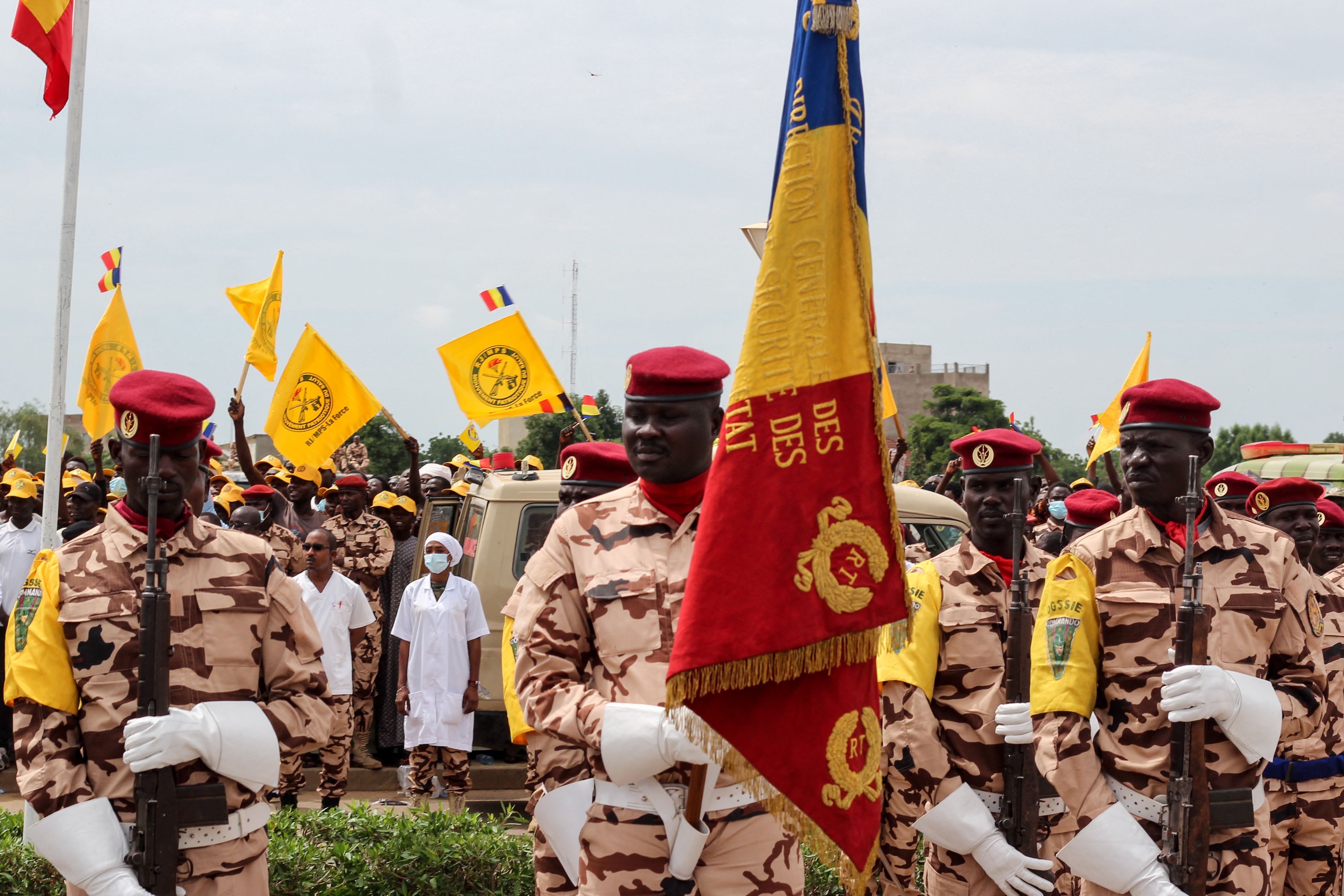 A military parade in N'Djamena in August 2021. Photographer: Djimet Wiche/AFP/Getty Images Splits over the conflicts in Gaza and Ukraine prevented Group of 20 finance chiefs from issuing a closing communique after their meetings in Brazil. This week's gathering has broadly seen a split between a US-led bloc of advanced economies — which have strongly opposed Russia's 2022 invasion of Ukraine and applied stringent economic penalties — and other countries, including those from Africa, that have been reluctant to back US sanctions, even if they've criticized the invasion. The division overshadowed the agenda which was mainly focused on financial issues, such as debt. Next Africa Quiz — Which country initially refused to allow a Norwegian cruise ship to dock at its port after suspecting a cholera outbreak on board? Send your answers to gbell16@bloomberg.net. Data Watch - Zimbabwean inflation climbed to 47.6% in February, the highest level in six months. Its statistics agency has twice adjusted how its price growth is calculated after the gauge surged. Kenya's inflation rate fell to 6.3%, an almost two-year low.
- Cocoa output in top grower Ivory Coast, which has been beset by unfavorable weather, is expected to slump more than 20% this season.
- MTN, Africa's biggest wireless service provider, said full-year profit probably plunged as much as 90% as devaluations of Nigeria's naira hit its financial performance.
Did you know Nigeria's benchmark index is the world best performing in local-currency terms? Click here top create your own portfolio Watchlist. Coming Up - March 5 South Africa GDP data for the fourth quarter, country PMI reports for Kenya, South Africa, Uganda, Ghana, Mozambique and Zambia
- March 6 South Africa business confidence data for the first quarter
- March 7 February inflation for Mauritius and Namibia, South Africa fourth-quarter current-account data & reserves for February, Mauritius reserves
- March 8 Nigeria trade data for the fourth quarter
"There is still lots to do apart from tightening naira liquidity," said Samantha Singh-Jami, Africa strategist at Rand Merchant Bank, after the Nigerian currency slumped to a new record low against the dollar despite a jumbo interest-rate hike. 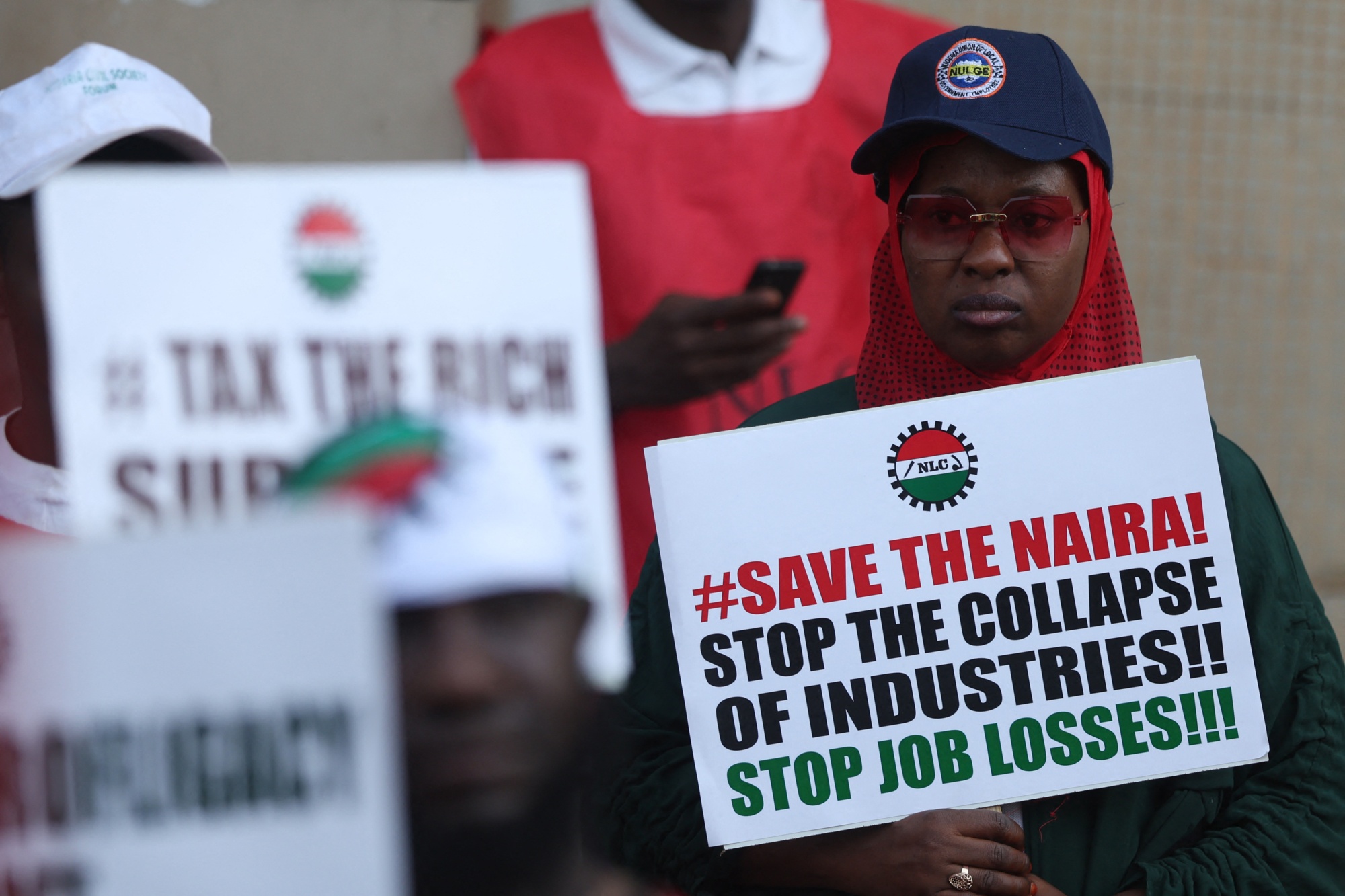 A protester during a union-led strike in Abuja on Feb. 27. Photographer: Kola Sulaimon/AFP/Getty Images Just 30 miles from Johannesburg, 1.7 million people are living in a crossfire of some of the most dangerous pollution on Earth. The toxins from industrial and coal-fired power plants are causing hundreds of premature deaths every year across the area known as the Vaal Triangle, and respiratory disease for many of those still breathing. The situation is a stark reminder of the toll the world's dependency on steel, oil and coal is having on human health – and the difficulty a green transition faces if it costs the livelihood of the workers who depend on old economy jobs. The plants offer steady work for residents at a time when one in three working-age South Africans are unemployed. Yet they're also pumping out harmful emissions at levels so high that Vereeniging, in the heart of the region, is by some measures the most polluted city on the planet. 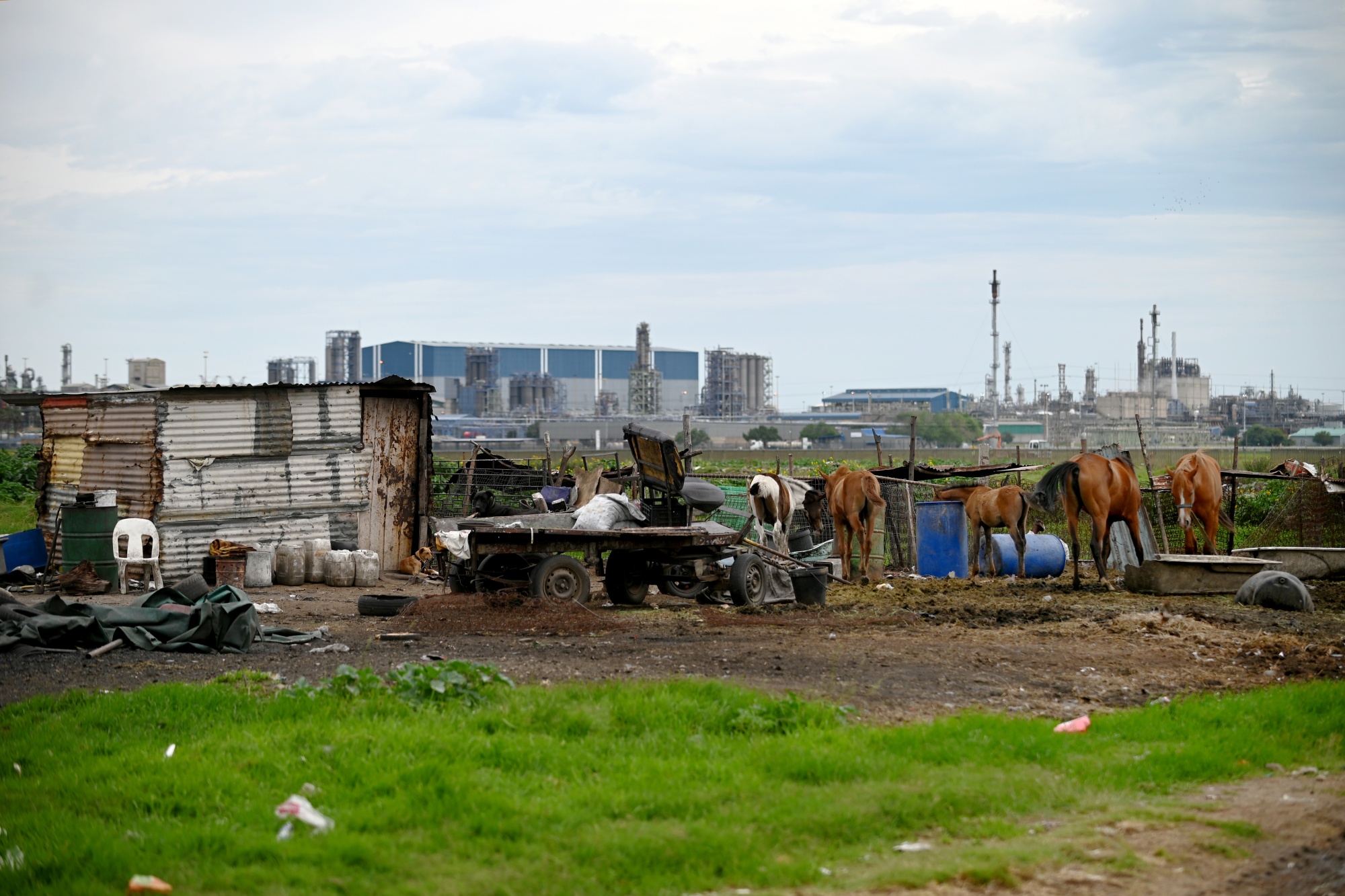 A shack near an industrial plant in the Vaal Triangle. Photographer: Leon Sadiki/Bloomberg Thanks for reading. We'll be back in your inbox with the next edition on Tuesday. Send any feedback to gbell16@bloomberg.net. | 









No comments:
Post a Comment