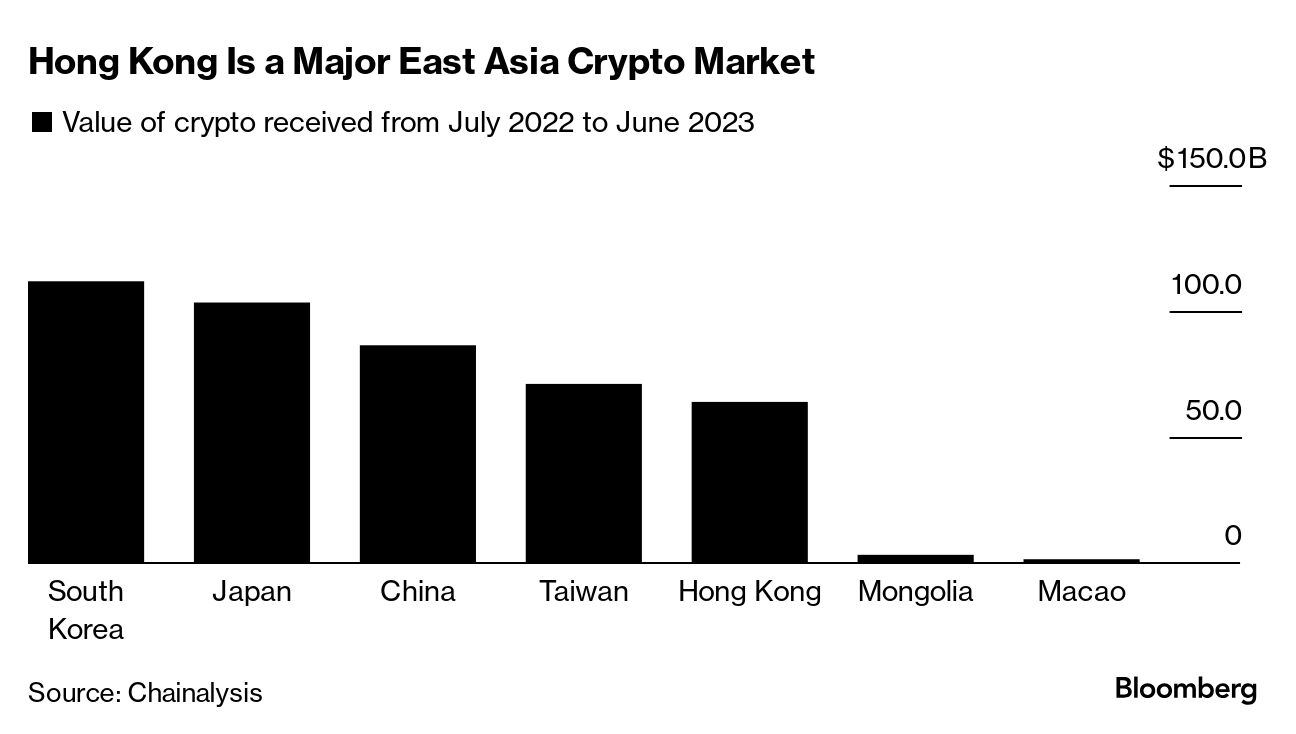
| Bitcoin's rally above $60,000 on the back of the launch of US exchange-traded funds is breathing new optimism into the cryptocurrency market, but that doesn't mean scrutiny of the industry from regulators will go away anytime soon. Take Hong Kong, for example. The city's avowed desire to create a digital-asset hub is likely to put a bunch of crypto firms out of business, an incongruity that illustrates — again — why the industry is a slippery bedfellow. Officials recently signaled they plan to impose strict rules on the swarm of small shops and ATMs dotted across the city that swap between cash and crypto. These walk-in outlets are popular because they undertake few, if any, checks on whether customers are up to no good, such as violating Beijing's limits on how much Chinese nationals can transfer overseas. The planned rulebook under the customs department will force service providers to maintain customer and transaction records while adding staff to monitor for misconduct like money laundering. The consequent jump in operational costs, alongside customer queasiness about flying above-the-radar, may well be the death knell for these often shoe box-sized outlets tucked into shopping malls. Shops and ATMs offering crypto-fiat conversions fall into the bucket of over-the-counter or OTC crypto trading, which made up the bulk of the $64 billion in crypto that Hong Kong received in the year ended June, Chainalysis data show. Presumably, officials would prefer to see more trading via dedicated digital-asset exchanges authorized under the crypto rules rolled out by Hong Kong's securities regulator in mid-2023. Only two platforms are licensed right now but 21 more applied ahead of a Feb. 29 deadline to obtain a permit or formally seek one. This rulebook for digital-asset exchanges is part of the city's more than year-old vision for a tightly governed crypto hub full of legitimate, visible transactions where investors are protected and companies gain the confidence to invest in innovation. Regulated tokenization, stablecoins and spot-crypto exchange-traded funds are all on the menu. All of which sounds great. But Hong Kong's now under-fire crypto shops suggest demand for digital assets springs partly from folks trying to keep a low profile. And they may not be all that keen to switch en masse to authorized channels. While there's definitely a strong correlation between tougher crypto regulation and reduced illicit activity, "whenever regulation is implemented there will inevitably be those that seek to subvert it," said Angela Ang, senior policy adviser at blockchain intelligence firm TRM Labs.
That will continue to be an elephant-in-the-room issue for the crypto industry, in Hong Kong and everywhere else, whether Bitcoin makes it to $70,000, $80,000 or beyond. | 





No comments:
Post a Comment