| By Siobhan Wagner After a year of record heat, climate change has become a critical issue for countries worldwide. And still, headwinds from rising interest rates to political debates over environmentally-focused investing have made tackling global warming more difficult. Indeed, a study last year found that global efforts to reach net-zero carbon emissions are failing in every way, with the exception of the boom in electric vehicle sales. Will the story change in 2024? Our reporters and editors have selected 12 things to watch to help you prepare for the events that could inspire or stymie more climate action this year. Green Energy Marches On Renewable energy will continue to grow worldwide in 2024, boosted by government incentives, supportive policies and a global push to decarbonize economies. Solar costs are at an all-time low and China is again forecast to dominate the market this year, according to BloombergNEF. Worldwide wind installations are expected to hit another record, although the pace of growth will be slower than solar as wind developers battle high interest rates and supply chain costs. — Mark Chediak 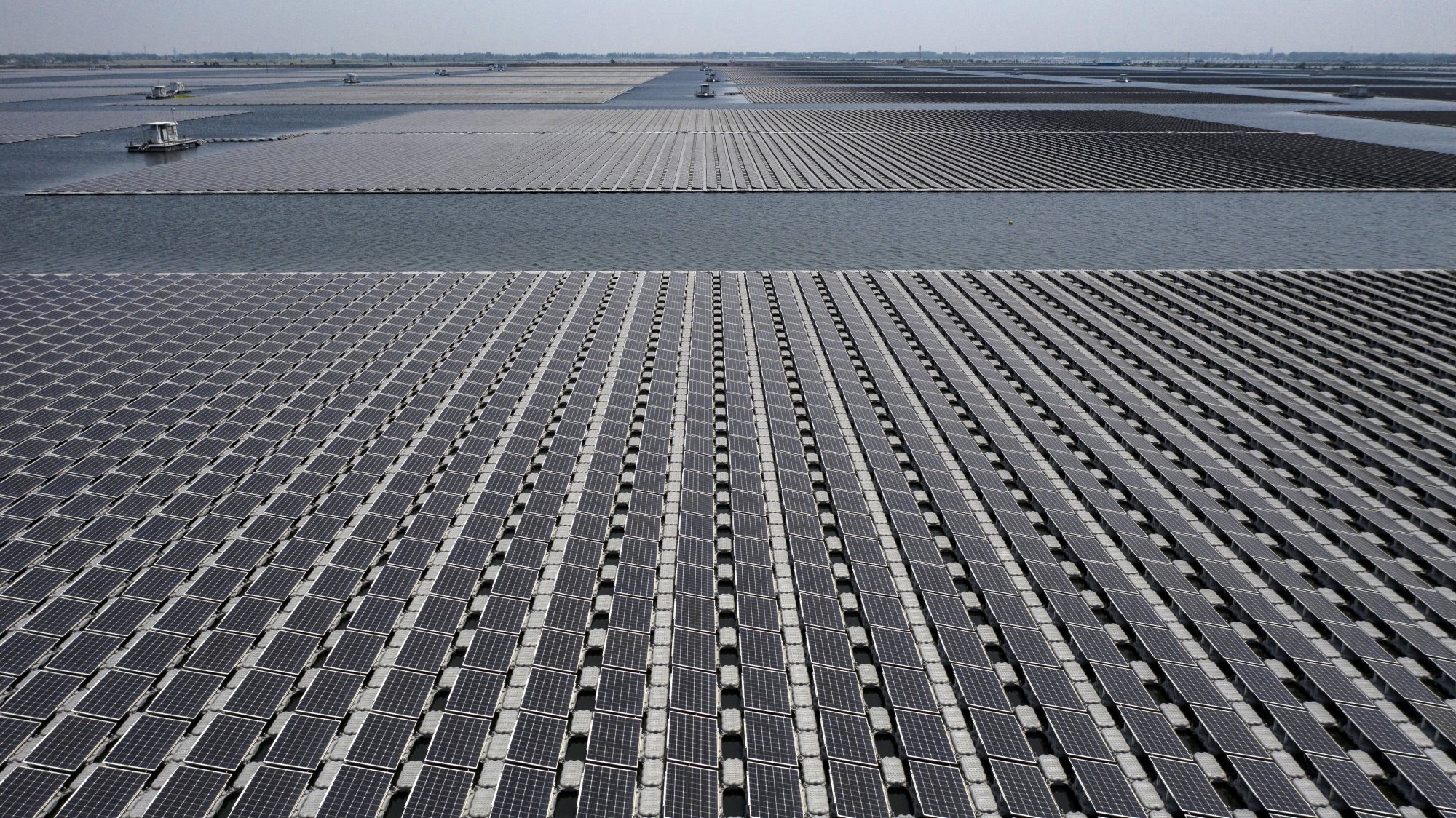 A floating solar farm of Sungrow Power Supply Co., built on the site of a former coal mine, since filled with water, in Huainan, China. Photographer: Qilai Shen/Bloomberg Trump Threatens Climate Progress US President Joe Biden came to power, in part, by promising his climate plans would finally redress long-standing inequalities. If Donald Trump wins this November, US Republicans are promising to enact their radical "Project 2025," which would amount to a brutal assault on climate action, gutting Biden's various environmental rules, with the ultimate aim of repealing the landmark Inflation Reduction Act. A Trump victory would also add another strident climate denier to the roster of world leaders, which now includes Javier Milei in Argentina and Geert Wilders in the Netherlands. — Leslie Kaufman and Ben Elgin EU Elections Test Its Climate Resolve The EU likes to present itself as the world's most climate-ambitious region. But an energy crisis unleashed by the war in Ukraine, high inflation and the rise of polarizing far-right parties make it hard for some conservatives that spearheaded the greener energy transition to continue championing these policies on the campaign trail. The continent's climate future will depend on who can form a majority in the EU parliament after June's elections. — Laura Millan Fossil Fuel Exporters Control Climate Talks After agreeing to "transition away from fossil fuels" at COP28 in the United Arab Emirates, the next United Nations climate talks will be hosted by Azerbaijan, another country rich in oil and gas. A main focus for negotiators in Baku will be to agree on a new climate finance goal to help poor countries recover from climate disasters and adapt to a hotter planet. There will also be strong debate over the future of natural gas. Azerbaijan has already started to promote its gas as a cleaner energy alternative. — Laura Millan Brace for More Climate Disasters The world is heading into a second year of the El Niño weather phenomenon. Climate scientists anticipate more record-breaking temperatures that are set to contribute to more dangerous storms, wildfires and floods. With all indications pointing to continued warm conditions across the ocean, 2024 could break into the top five most active hurricane years. Scientists will also be keeping their eyes on the poles — where ice has melted at disturbing rates. — Laura Millan and Brian K. Sullivan 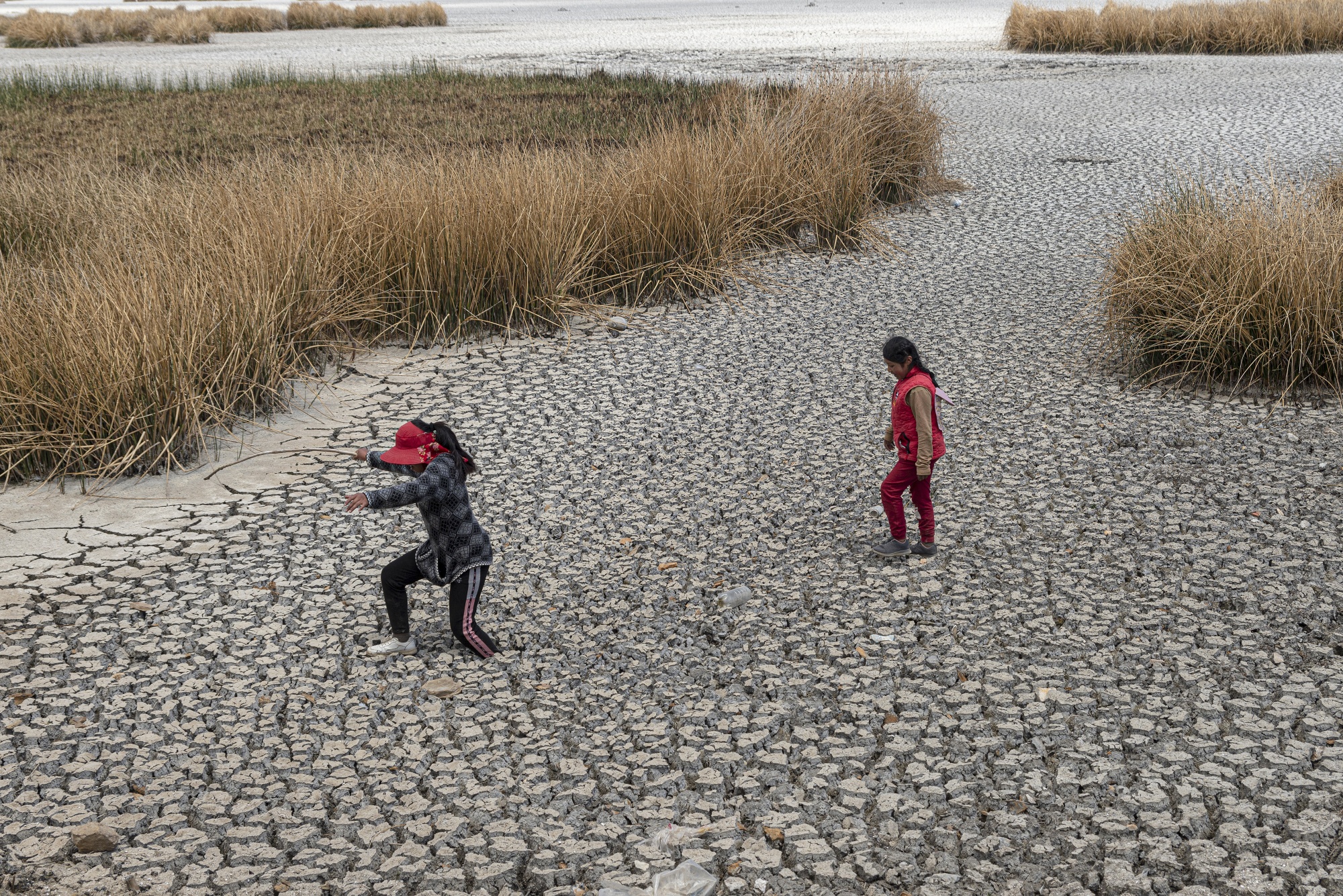 Children walk over muddy ground during drought conditions at Lake Titicaca in Huarina, Bolivia, on Wednesday, Nov. 1, 2023. Photographer: Marcelo Perez del Carpio/Bloomberg Food Rises on the Climate Agenda While forecasters expect El Niño to fade by this summer, its effects will last for months to come – from higher inflation to drought and impacts on food supply chains. Food systems are thankfully starting to see more climate funding. New money pledged for food's climate fight topped $7 billion during this year's COP28 summit. The financing has been promised for helping farmers curb their footprint and adapt to climate change, including through innovation and regenerative agriculture. — Laura Millan and Agnieszka de Sousa EVs Face a Tougher Market BloombergNEF expects automakers to sell 16.7 million battery-electric and plug-in hybrid vehicles in 2024. While that would be up 20% from where the researcher expects sales to end up in 2023, it's about 4% lower than what BNEF estimated in June. Tougher economic conditions for US customers was cited as one of the reasons for the slowdown in growth. There will be a greater variety of models on the market this year, though, as more super-sized electric SUVs roll into dealerships. — Craig Trudell and Kyle Stock  A Nissan Motor Co. Ariya electric crossover sport utility vehicle on display at the company's showroom in Kaminokawa, Tochigi Prefecture, Japan on Dec. 8, 2023. Photographer: Akio Kon/Bloomberg ESG May Prove Its Merit Despite Backlash The drumbeat against ESG is almost certain to increase with the US election, led by politicians such as Republican Jim Jordan of Ohio and his GOP colleagues in states including Texas, Florida and Tennessee. The backlash contributed to outflows from US-based funds in 2023. And the number of legal challenges is growing by the day. Not everyone is ready to throw in the towel, though. Analysts at JPMorgan wrote in a recent note to clients that equity strategies with an ESG tilt are set to recover and even beat the market in 2024. — Saijel Kishan and Tim Quinson Prepare for More ESG Rules and Regulations In the US, the Securities and Exchange Commission is expected to announce its long-awaited corporate disclosure rule for greenhouse gases and climate-related financial risks during the first half of 2024. The plan will likely be met by derision and accompanying lawsuits from company executives, lobbyists and Republican lawmakers. In Europe, confusion around rules like the Sustainable Finance Disclosure Regulation continues to weigh on the market. Separately, the European Central Bank has warned that it has more tools than just fines to ensure the region's banks don't mismanage the impact of climate change on their business. The European Banking Authority is also imposing new requirements around how banks conduct risk assessments. — Frances Schwartzkopff and Tim Quinson New Greenwashing Fears on the Horizon Transition finance can help companies cut emissions and invest in technologies that will replace carbon-intensive energy, transportation or industrial processes. It's already becoming big business for the world's largest investors: BlackRock has a $100 billion transition-investing platform, Apollo aims to grow its transition assets to a similar size and Brookfield is shooting for more than $200 billion. This sort of finance is essential for the world's climate goals, but without clear definitions of what constitutes a transition asset, financiers will be vulnerable to accusations of greenwashing. —Alastair Marsh Carbon Markets Still Have a Reputation Problem A new United Nations-overseen emissions market, which could help channel climate finance to poor countries, is in limbo after COP28 negotiators failed to agree on standards. It was hoped that newly agreed rules would bring back credibility to carbon markets, which have suffered reputational damage due to quality-related issues with voluntary credits. — Ewa Krukowska and Natasha White Satellites Bring Methane Accountability More than 150 countries are now signed up to the Global Methane Pledge, launched by the EU and US two years ago, to slash emissions of the potent greenhouse gas by 30% by 2030. A flood of satellite data now means it's easier than ever to identify and track oil, gas and coal companies responsible for some of the world's most devastating emissions. The onus is now on operators to make systemic changes to eliminate these largely avoidable emissions and for regulators to hold them accountable. — Aaron Clark | 








No comments:
Post a Comment