Wednesday, November 1, 2023

Bleak temperature scores

A new gauge that's hard to game

Today's newsletter looks at an important new environmental gauge for ESG investors to consider. You can read and share the lead story on Bloomberg.com. 

Also, take a look at the latest from the magazine. Bloomberg Green covers China's richest person, Zhong Shanshan, who made his fortune bottling pristine water. Read this story online and subscribe to receive the magazine in print. 

Temperature scores paint dark investing picture

By Alastair Marsh

You've heard of ROE, EPS and EBIDTA. But what about ITR?

It's one of the latest additions to the alphabet soup of modern finance, standing for implied temperature rise. It denotes an investment portfolio's alignment with the 2015 Paris Agreement's goal of limiting global warming to well below 2C of pre-industrial levels, and ideally below 1.5C (a goal that is almost out of reach).

Many of the giants of investment management, from BlackRock Inc. and State Street Global Advisors to the asset management arm of JPMorgan Chase & Co., now publish temperature scores for some of their funds—and what they're reporting paints an overwhelmingly pessimistic outlook for global warming.

Take the Invesco High Yield Fund UK for example. The £331 million ($401 million) fund invests in bonds from the likes of Barclays Plc and Vodafone Group Plc and expects an ITR of 3.7C. And then there's a recently-liquidated high yield fund from Fidelity International that in June recorded an ITR range of 3.2C to 6C.

An implied temperature rise is typically calculated based on projected future greenhouse gas emissions. It estimates the increase in global temperatures that would occur by 2100 if the whole economy were to overshoot its carbon budget to the same degree as a fund's portfolio.

At 3C, scientists warn of mass extinctions of animal species, large parts of the planet becoming uninhabitable due to extreme heat, rising sea levels swallowing up coastal cities and lush rainforests turning into savannas.

Photographer: Gary Hershorn/Corbis News

Still, while few fund managers doubt the science of climate change, many question the accuracy and usefulness of ITRs.

Gabriel Wilson-Otto, head of sustainable investing strategy at Fidelity International, said ITRs should be considered alongside other climate indicators "given the level of assumptions and uncertainty that are inherent within the calculation."

An Invesco Ltd. spokesperson said an ITR's most effective application currently is as a precursor to more nuanced research, and the firm cautions against drawing definitive conclusions from an ITR in isolation. However, even though the methodologies and applications of ITR are evolving, its utility can't be dismissed, the spokesperson said. Atlanta-based Invesco began publishing portfolio-level warming scores this year for some UK-based funds, in response to new climate disclosure regulations from the Financial Conduct Authority.

But some investors are less sanguine about the merits of ITRs. Baillie Gifford decided against providing such metrics for all of its portfolios. In a statement, the firm said "current methodologies don't render them practicable for widespread use and potentially could lead to inaccurate or misleading disclosures, particularly when there are significant gaps in the underlying data."

Aviva Investors said the methodologies are too complex and nascent to be relied on. In a statement, the asset manager said it isn't "appropriate to publish this data, as it risks being potentially misleading and in any event would be heavily caveated."

Invesco said the implied temperature rise for its high-yield fund was calculated using data from Planetrics, which covers 66% of the fund's assets, excluding cash. The calculation considers each individual asset's divergence from the expected decarbonization pathway of the sector and region in which it operates, and then is aggregated to a portfolio level based on a combination of median greenhouse gas intensity data for relevant sectors and asset weighting.

For all the complexity and criticism, ITR metrics have a key redeeming feature, according to Iancu Daramus, head of sustainability at Fulcrum Asset Management in London: They can't easily be gamed to suggest improved carbon performance by fund managers.

"You can halve your portfolio's emissions by kicking out just a few stocks, but you can't halve your ITR that way," Daramus explained. In other words, while a fund manager can drastically improve the carbon performance of a portfolio by simply divesting shares of the most carbon-intensive companies, an ITR can't be cut so quickly since portfolio divestments have minimal impact on the warming trajectory of the real economy, he said.

And a warmer world portends not only more frequent and more extreme heat waves, floods and wildfires—but also a substantial hit to asset values.

"If aligning the global economy with the Paris Agreement is hard, there should be no shortcut for aligning portfolios," Daramus said.

Sustainable finance in brief

Investors face a growing risk that the climate crisis will result in a sudden loss of value, according to Markus Müller, chief investment officer for ESG at Deutsche Bank. He says investors need to prepare themselves for the unanticipated consequences of "fat-tail" dangers associated with accelerating global warming. Though such events are deemed unlikely, their fallout can be catastrophic. "The temptation is to assume that the effects...will accumulate only gradually," he said in a client note. "However, this isn't guaranteed."

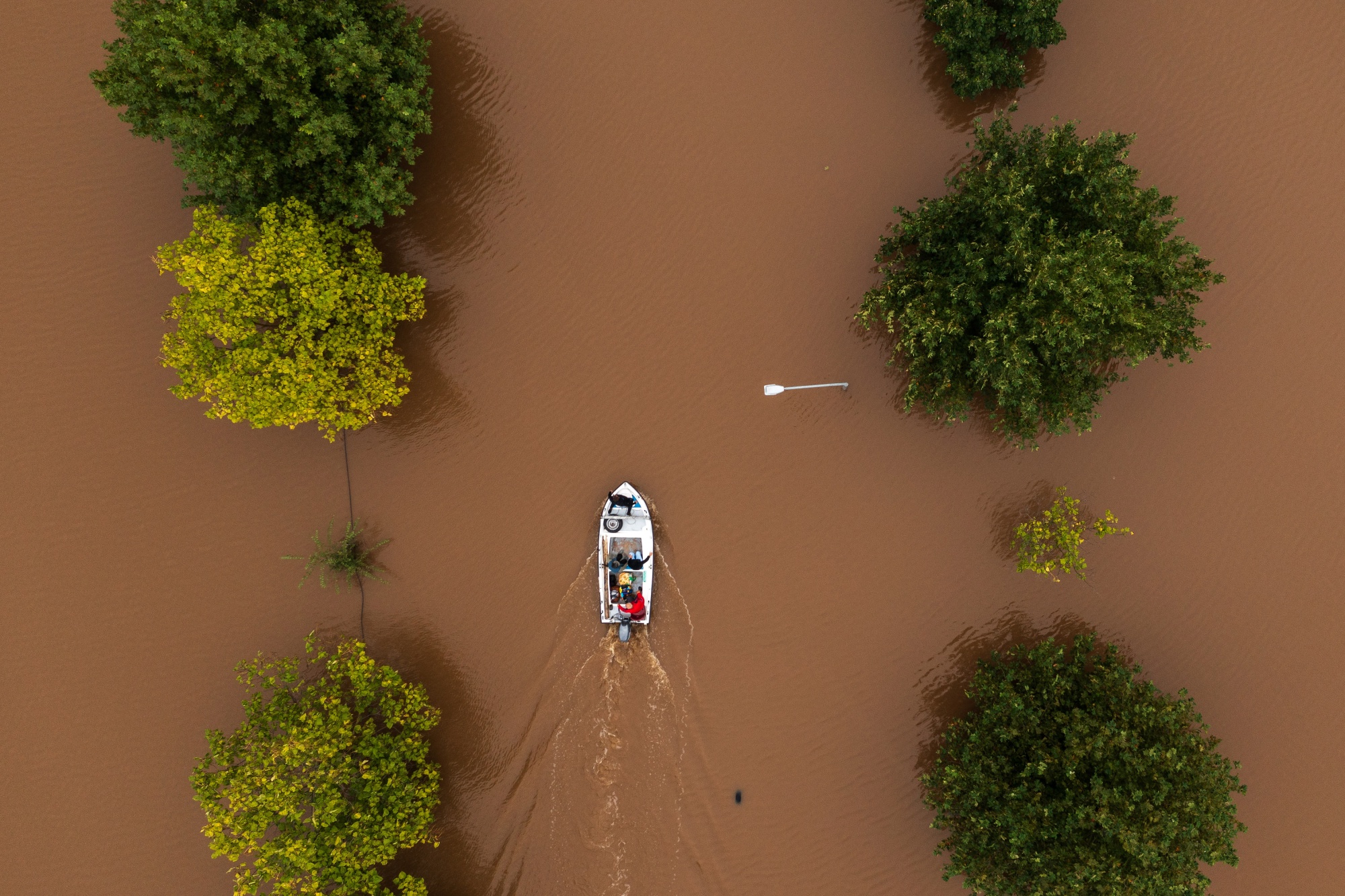
Fossil fuel emissions are warming the planet, triggering extreme weather from wildfires in Greece and Canada to violent storms and flooding. Photographer: Konstantinos Tsakalidis/Bloomberg
  • New standards for the global carbon offsets market threaten to wipe out "a lot" of value for investors, according to Lombard Odier.
  • The world's biggest ESG fund category is also by far its most opaque, and that's starting to bug investors.
  • Several hedge fund managers have started ratcheting up their exposure to uranium stocks, as they bet on significant price gains thanks to nuclear power's role in the energy transition.

More from Green

More bottled water is consumed in China than anywhere else. In most major cities, it's not just a convenient way to hydrate on the go; it's a necessity. The government advises against directly consuming tap water.

All of this has helped make Zhong Shanshan the richest man in the country. Zhong built his Nongfu Spring water bottle empire by extracting from some of the country's most ecologically important rivers and mountains. To keep increasing his riches and meet rising demand, however, he'll have to find ever more water sources.

Illustration: Derek Zheng for Bloomberg Green

Trump voters love Biden's green jobs. In a deep-red Alabama district, First Solar is building a $1.1 billion solar-panel factory. The plant will span an area close to the size of 40 football fields and create more than 700 jobs.

Airlines push for green fuel tax policy. Boeing Co., Archer-Daniels-Midland Co., Delta Air Lines Inc. say the market needs certainty to build a thriving US industry for green jet fuel.

Extreme heat has unleashed rain like never beforeUnusually violent downpours have hit every inhabited continent this year. From Storm Daniel in Libya to Typhoon Doksuri in China, the damage has been severe.

Weather watch

By Brian K. Sullivan

Storm Ciaran will strike the southern UK in a matter of hours bringing hurricane-strength wind gusts and heavy rain certain to disrupt rail and air traffic, as well as cause widespread flooding, but the worst impacts will be Thursday.

Winds will start to pickup in the southwest as Ciaran approaches later Wednesday, said Alex Deakin, a meteorologist with the UK Met Office in a video briefing. By Thursday, wind gusts could reach as high as 80 miles per hour "perhaps even a little more in some exposed places," he said. While not as severe, London will still see some damaging gusts.

"It's been intensifying way out in the Atlantic overnight, but it is still picking up strength as we go through this morning," Deakin said.
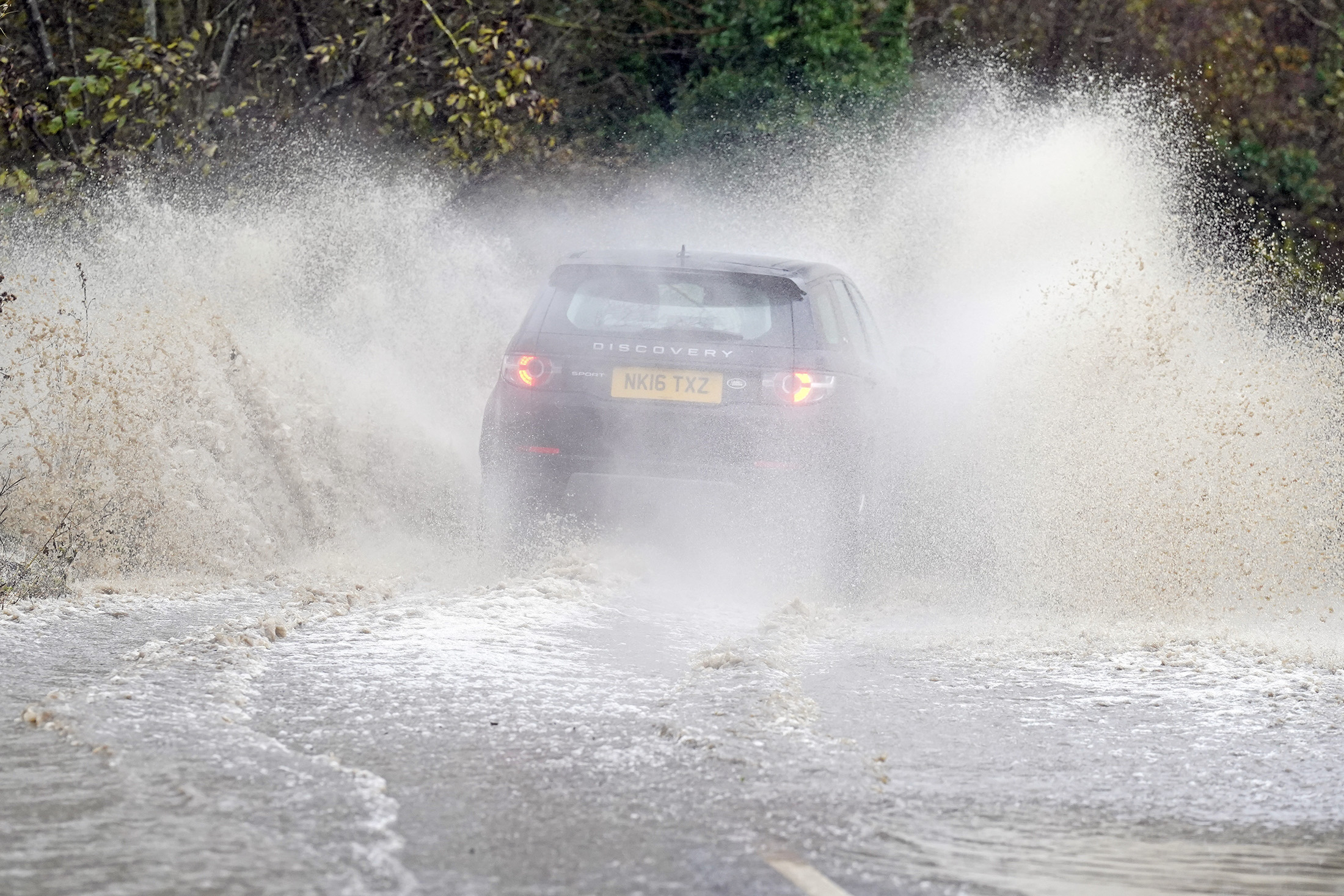
A vehicle drives through flood water near Whitley Bay, UK, on Nov. 1. Photographer: Owen Humphreys/PA Images/Getty Images 

The World Meteorological Organization says Ciaran could bring waves up to 10 meters in the Atlantic.

As is the case with tropical systems, the exact track Ciaran makes as it crosses the UK late Wednesday into Thursday will determine where the strongest winds and potentially most damage will occur. In addition to the UK, parts of France will also be buffeted by high winds, crashing waves and heavy rain. The highest winds could occur on both coasts of the English Channel. 

In addition, because the storm is spinning counter-clockwise, it will pump heavy rain into central and northern England throughout the day Thursday as it moves along the Channel. 

Several rail services across the UK could be affected by the storm, including Gatwick Express, Southern and Thameslink services, according to National Rail's website. Gatwick Express is already experiencing delays due to signaling issues on the line. 

The jet stream across the Atlantic helping fuel Ciaran's power has also given airlines traveling from North America to Europe and beyond a boost in speed with many reaching or exceeding 700 miles per hour. On average, planes usually make the crossing at about 550 to 600 mph. 

A quick sampling of flights this morning shows a Martinair Cargo 747 out of Miami bound for Amsterdam was cruising along at 706 mph, according to FlightRadar24's website. British Airways Airbus A350 traveling from Las Vegas to London had hit 760 mph, while a nearby Aeromexico Boeing 787 was jetting along at 761 mph. 

In comparison, flights coming the other way aren't reaching such high speeds, a United Airlines Boeing 767 traveling from London to New York was chugging along at 497 mph and a TUI flight from Amsterdam to Punta Cana, Dominican Republic was moving at 445 mph as it crosses the Atlantic. 

US: A cold snap in the southern and eastern US is potentially bringing an end to the growing seasons there as temperatures drop. Wednesday's low in Atlanta is forecast to hit 32F (0C) or the freezing mark, according to the National Weather Service. In addition, there is an elevated risk of fire weather across the US Gulf Coast. 

Tropic: The only storm out there right now is Tropical Storm Pilar, which is pulling away from Central America and heading out into the Pacific. Today is the start of the last official month of the Atlantic hurricane season. 

Worth a listen

Last week, the International Energy Agency published its flagship report: The World Energy Outlook. It's dominating climate news because what the IEA says makes a big difference to how governments tweak their energy policies. But how did an organization formed by a handful of countries in response to the 1973 oil crisis come to hold so much influence over our response to the climate crisis? For the answer, we're revisiting one of our favorite episodes: an interview with Fatih Birol, the head of the IEA about how the IEA has cemented its role in the energy transition. Subscribe to Zero on Apple or Spotify to get new episodes every Thursday.
Bloomberg Green at COP28

World leaders will gather in Dubai on Dec.4-5 in an effort to accelerate global climate action. Against the backdrop of the United Nations Climate Change Conference, Bloomberg will convene corporate leaders, government officials and industry specialists from NGOs, IGOs, business and academia for events and conversations focused on creating solutions to support the goals set forth at COP28. Register here.

No comments:

Post a Comment

I’ll reveal my favorite daily trade for this year in the next few hours

Get your login link before then View in browser View in browser                   Happy Weekend! What will you be up to @1PM eastern tod...