- Some foreigners and wounded Palestinians were allowed to leave Gaza for the first time.
- Three of Donald Trump's children will testify over the next week in the civil fraud trial against the Trump Organization.
- A Missouri jury awarded nearly $1.8 billion to homebuyers in a ruling that's a significant blow to the battered real estate industry.
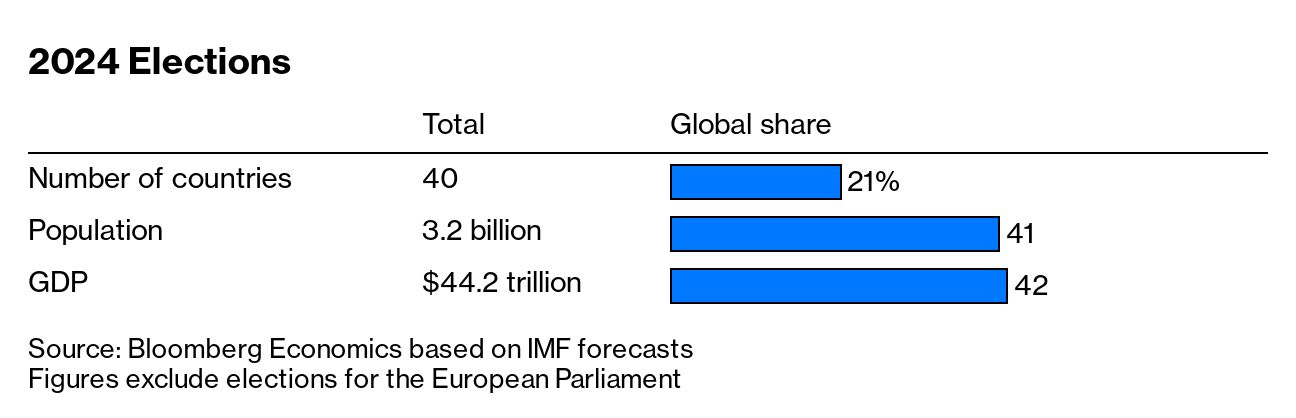
The world economy is lumbering from one shock to another as two brutal wars, stubborn inflation and high borrowing costs hold back the post-pandemic recovery. The next source of turbulence in the polycrisis era: a packed 2024 election calendar. Starting with Taiwan in January and running through the US presidential election in November, the year will bring 40 national elections—a busy lineup even in calmer political times. Bloomberg Economics calculates that voters in countries representing 41% of the world's population and 42% of its gross domestic product have a chance to elect new leaders next year. 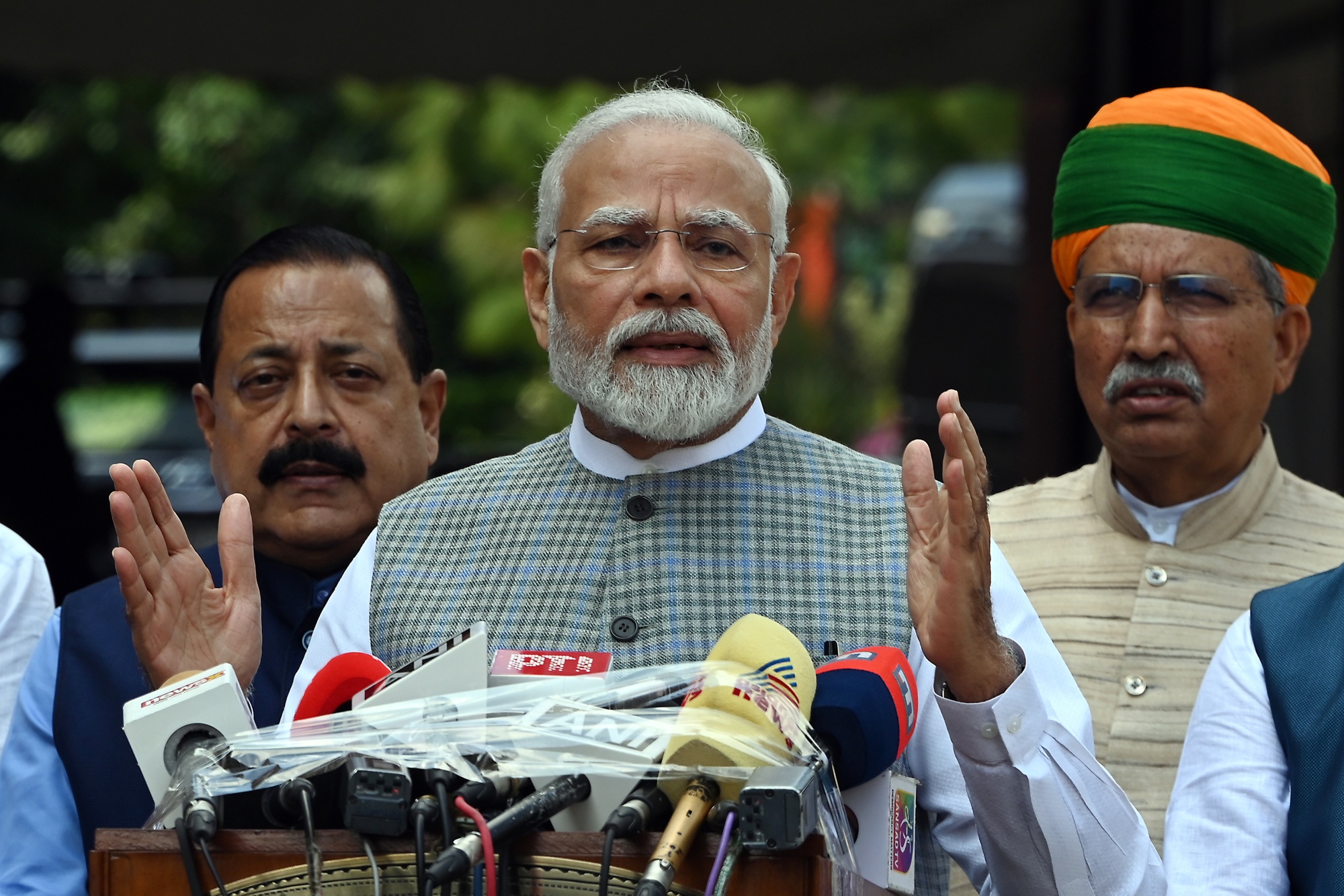 Narendra Modi, India's prime minister, speaks at a news conference ahead of a special session of Parliament in New Delhi, on Sept. 18, 2023. Photographer: Prakash Singh/Bloomberg With two wars raging, tensions between the US and China escalating and political polarization worsening before critical elections, the potential for disruption in 2024 is huge. Money managers and corporate planners beware: This will not be the year to keep your investment plans on autopilot. It's "a very consequential year," say Stanford University political scientist Amy Zegart, who previously advised the US government on national security. "The more uncertainty there is about anything—the rules of the game, interest rates, how markets are likely to move, government regulation, policy—the more difficult it is from a business perspective." The threats help explain why Elliott Investment Management's founder, Paul Singer, long known for his consistently bearish views, says global conditions are much more perilous than those the markets are pricing in. "The world is now completely dependent on the good sense of leaders to avoid an Armageddon," the billionaire investor said at a conference panel on Oct. 19. "It's hard to avoid the conclusion that investors aren't nearly as worried as they should be." Jennifer Welch, chief geo-economics analyst at Bloomberg Economics, says the world faces perhaps its most tumultuous year in a generation from a geopolitical standpoint. In addition to the strains already mentioned, governments and companies are engaged in a global competition to lock down supplies of the raw materials needed to transition to cleaner energy and protect local industries. "Upcoming elections will up the ante for ruling parties to score geopolitical wins," Welch says. "In the US, for example, taking a tough stance on China is likely to be seen as a vote-winning strategy by both major parties. This, and the possibility the election will usher in new policies, will create a period of increased uncertainty for other governments and multinationals." Countries heading to the polls in 2024 run the gamut of size and influence: They include resource-rich nations such as Indonesia and Venezuela, reshoring darling Mexico and politically unstable South Sudan, as well as geopolitical hot spots Taiwan and Pakistan. Tunisia, where the Arab Spring was born in 2011, may hold a presidential election around October next year. And some of the US's traditional European allies, including Austria, Belgium and the UK, face leadership races. Taiwan's presidential election could set the tone for US-China relations for years to come, with tensions likely to escalate further if current Vice President Lai Ching-te wins as forecast. Indonesia votes in February, with Prabowo Subianto, a Suharto-era lieutenant general once denied a visa by the US for alleged human rights abuses, in the lead. In June he proposed a peace plan for Ukraine that would leave occupying Russian forces in place. For the first time since the end of apartheid in the early 1990s, South Africa's ruling African National Congress faces the prospect of losing its overall majority, forcing it to govern the country in a coalition with other parties. A surprise loss for Indian Prime Minister Narendra Modi, who's been in office since 2014, could spook investors in a nation the US and its allies are counting on to become a counterweight to China's economic and military might. And there's more! For Enda Curran and Alan Crawford's complete look at how this confluence of consequential elections will affect the economy, go here. | 







No comments:
Post a Comment