Thursday, June 1, 2023

All kinds of jobs are climate jobs

Climate startups want non-techies, too.

Happy Thursday. Today our Sparklines columnist finds there's much more to recruitment in climate tech than, well, the tech part. You can read and share a free version of this story on Bloomberg.com. Subscribe to Bloomberg for unlimited access to climate and energy news, and to receive Bloomberg Green magazine. 

Climate tech needs engineers — but also HR reps

By Nathaniel Bullard

Since the start of 2023, more than 700 tech companies around the world have laid off a total of almost 200,000 employees. Tech employment in the US, however, was as of late March still about 7% above its level before the pandemic. And for tech workers who want to put their skills to use outside their traditional fields, climate companies are hiring across the board. 

Global hiring and networking site Climatebase has posted more than 46,000 jobs from over 1,500 organizations (both for- and not-for-profit) over the past two years. Certainly, highly technical jobs related to the science of climate mitigation and adaptation are in high demand. But so too are roles familiar from any global business. It is mostly these roles that climate tech firms seek to fill, according to data that Climatebase shared with Bloomberg Green

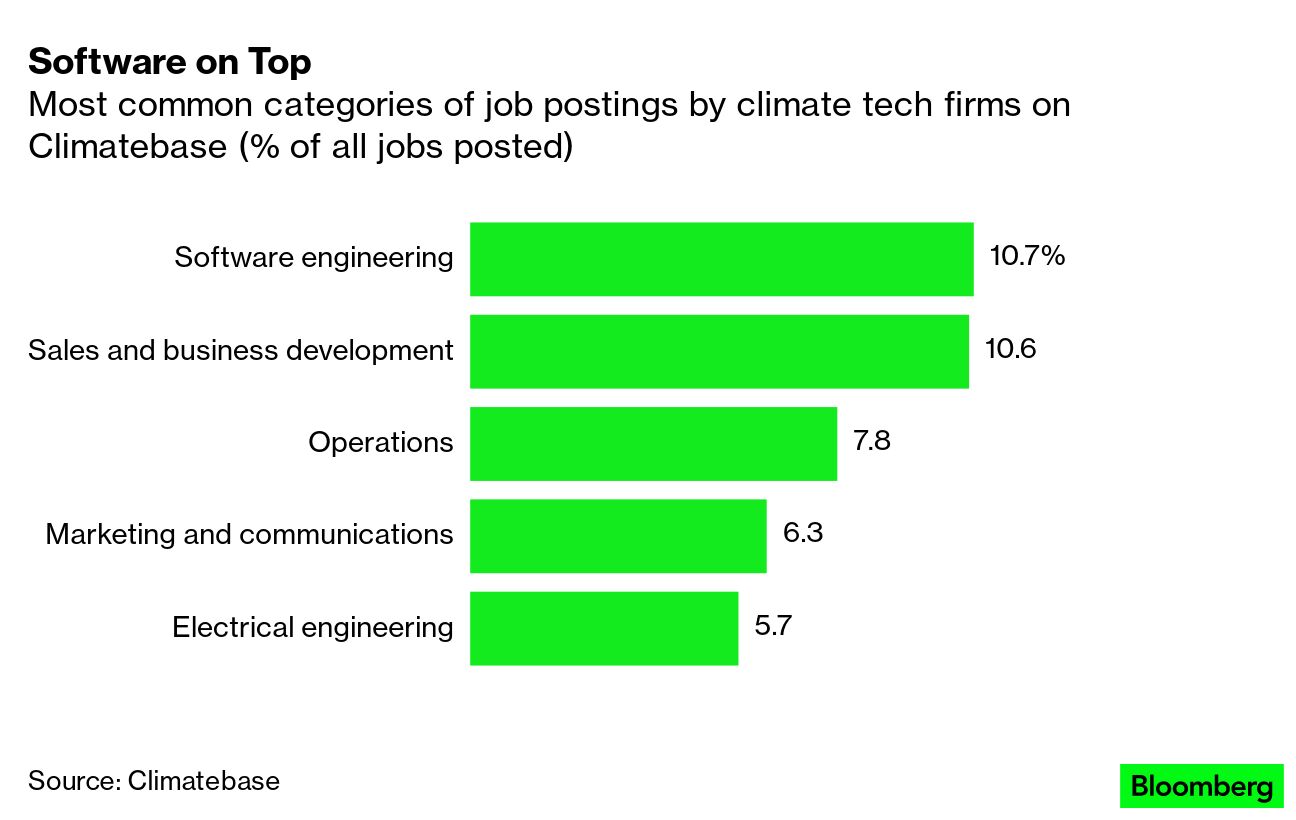
Across all the job postings shared on the site from Jan. 1, 2021 through May 14, 2023, the single most in-demand category was software engineering. But the next three were more general in nature: sales and business development, operations and marketing and communications. 

The fifth was electrical engineering. If we consider the fact that software and electrical engineering are both quite general as technical roles are concerned, then none of the job roles that are in highest demand in climate tech are necessarily climate-specific. 

At least a quarter of all job ads on the site have been for roles that are highly interchangeable not only across companies, but across sectors. However, there are still important distinctions among key hiring regions in the US.

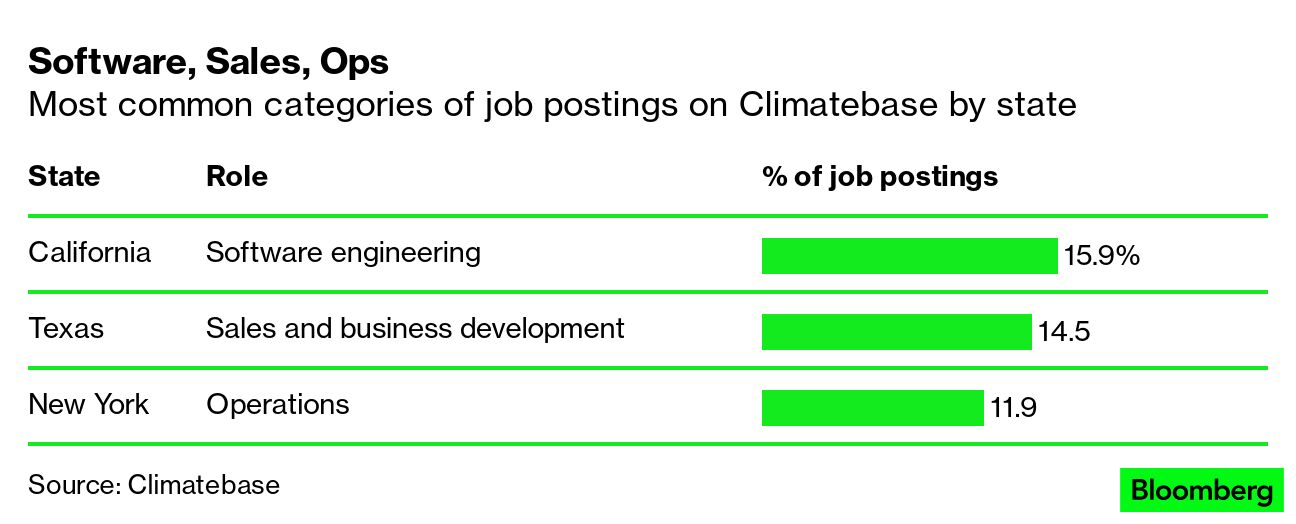
In California, software engineering is the most in-demand kind of role. In Texas, it's sales and business development, while in New York it's operations. California stands out as an engineering-heavy jobs market, with mechanical and electrical engineering also making the state's top five. 

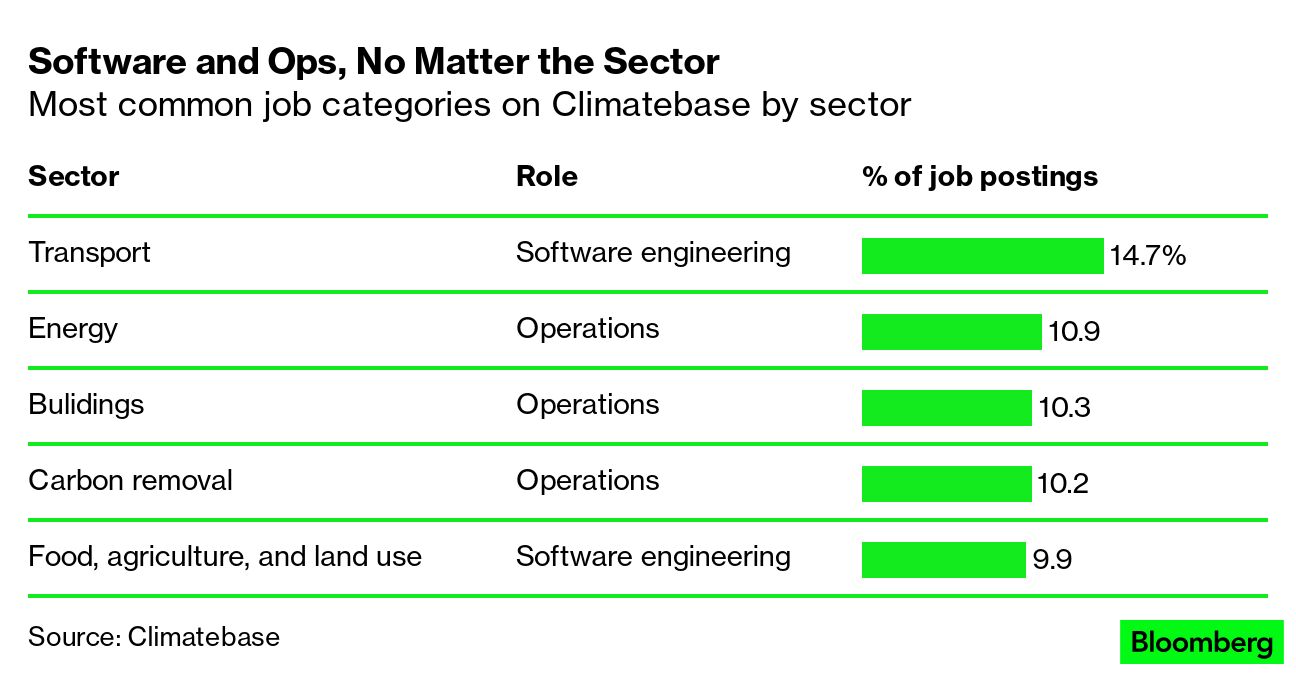
There are also sector-specific distinctions within climate tech. Transport-related businesses, and those specializing in food and agriculture, seek software engineers above all. But in the energy, buildings and carbon removal sectors, operations talent is most in demand. Distinct categories pop out in some sectors' listings: Human resources ranks fifth for food and agriculture, while for buildings, design comes fifth. 

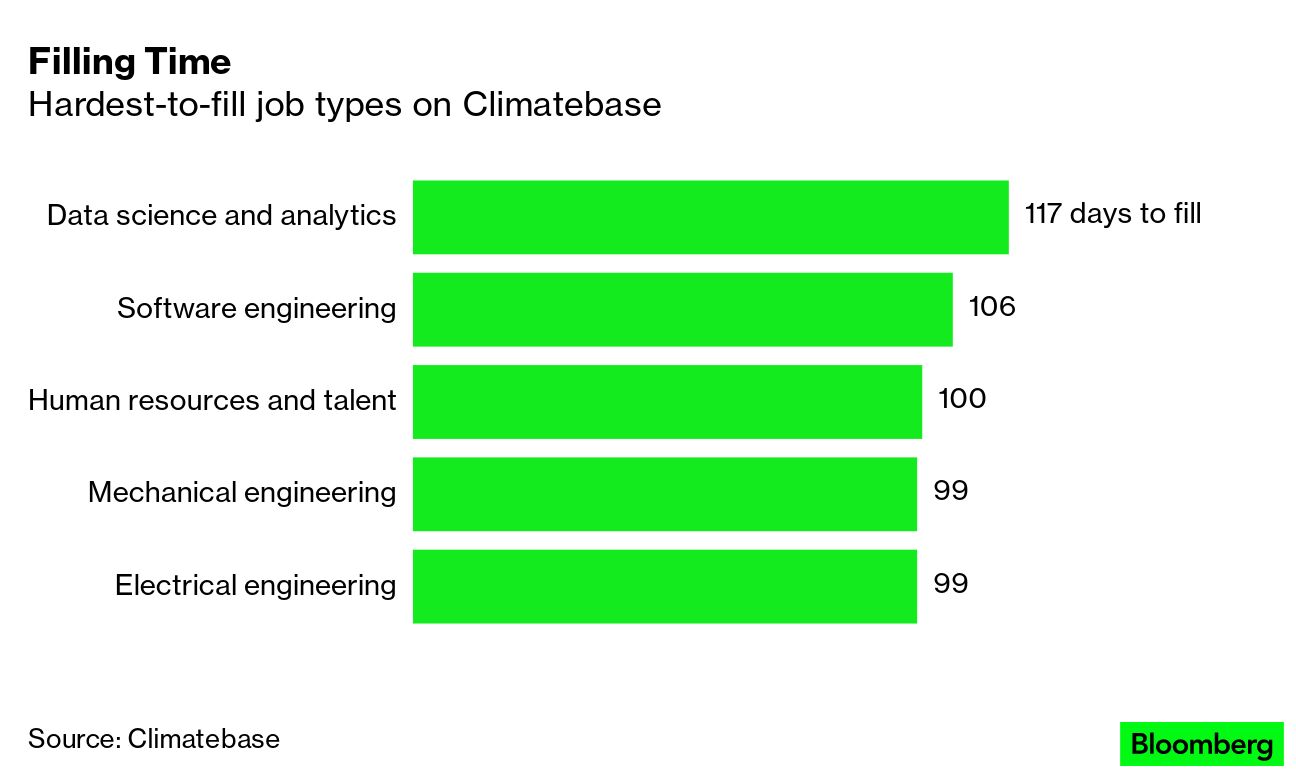
Key jobs may be in demand across climate companies, but that doesn't mean they're easy to fill. Hiring for engineering roles, whether software, mechanical or electrical, takes at least three months, according to Climatebase. Human resources jobs take 100 days to fill on average. The hardest roles to fill? Data science and analytics, which take an average of nearly four months. 

The picture this data paints is nuanced. Different sectors have some key in-demand skills, as do specific regions of the US. Analytics and software roles are hard to fill, universally — and so for that matter are human resources jobs. But more important than the differences in what climate tech firms are looking for in their hiring pool are the similarities. Software engineering experience is needed everywhere; so too is operational expertise. 

This should be heartening news to those hoping to break into climate tech. Deeply technical skills are essential for founding deeply technical companies. But growing those companies demands the same general business roles, and skills, that any successful enterprise does. 

Nat Bullard is a senior contributor to BloombergNEF and writes the Sparklines column for Bloomberg Green. He advises early-stage climate technology companies and climate investors.

New opportunities 

4,500
This is how many jobs a single offshore wind farm built in the Gulf of Mexico could create, according to the US Department of Energy.

Red to green

"For Georgians, climate policy might be a tough starter. But new jobs isn't."
Kevin Book
Managing director at ClearView Energy Partners
Weaning off fossil fuels is surprisingly good politics in the once deeply red state Georgia thanks to new solar, electric-vehicle and battery manufacturing jobs.

More from Green

Britain is coming to terms with a new water poor reality, as Bloomberg Green reported yesterday. Meet the workers who are trying to save every last drop of the country's most precious resource. Olivia Rudgard followed London's leak hunters late at night as they scan the city's underground world for broken pipes. Click here for the full story with photos. 

Engineers Ciprian Daraban and Matthew Morris from Thames Water listen for leaks on May 3.  Photographer: Jose Sarmento Matos/Bloomberg

A massive boost for wind turbines in the sea. China's Guangdong province is accepting bids this month to construct 23 gigawatts of offshore wind power. This is more than the world has ever built in a year.

New Zealand manages climate impacts. The government will help to buy out the owners of cyclone and flood-damaged houses in areas deemed susceptible to severe weather events, beginning a process of managed retreat in the face of climate change.

Petrobras is using carbon to pump more crude. Brazil's state-controlled oil giant is capturing and storing a growing amount of carbon dioxide below the seabed to boost oil and natural gas production — a strategy that it views as green. 

Worth a listen

Why does the writer of Love Actually want your retirement fund to go green? This week on the Zero podcast, Akshat Rathi talks with Richard Curtis, founder of Make My Money Matter and the writer of Notting HillMr. Bean and Four Weddings and a Funeral, about why pensions are the secret weapon in the climate fight. Listen now — and subscribe on AppleSpotify, or Google to get new episodes every Thursday.

Weather watch

By Brian K. Sullivan

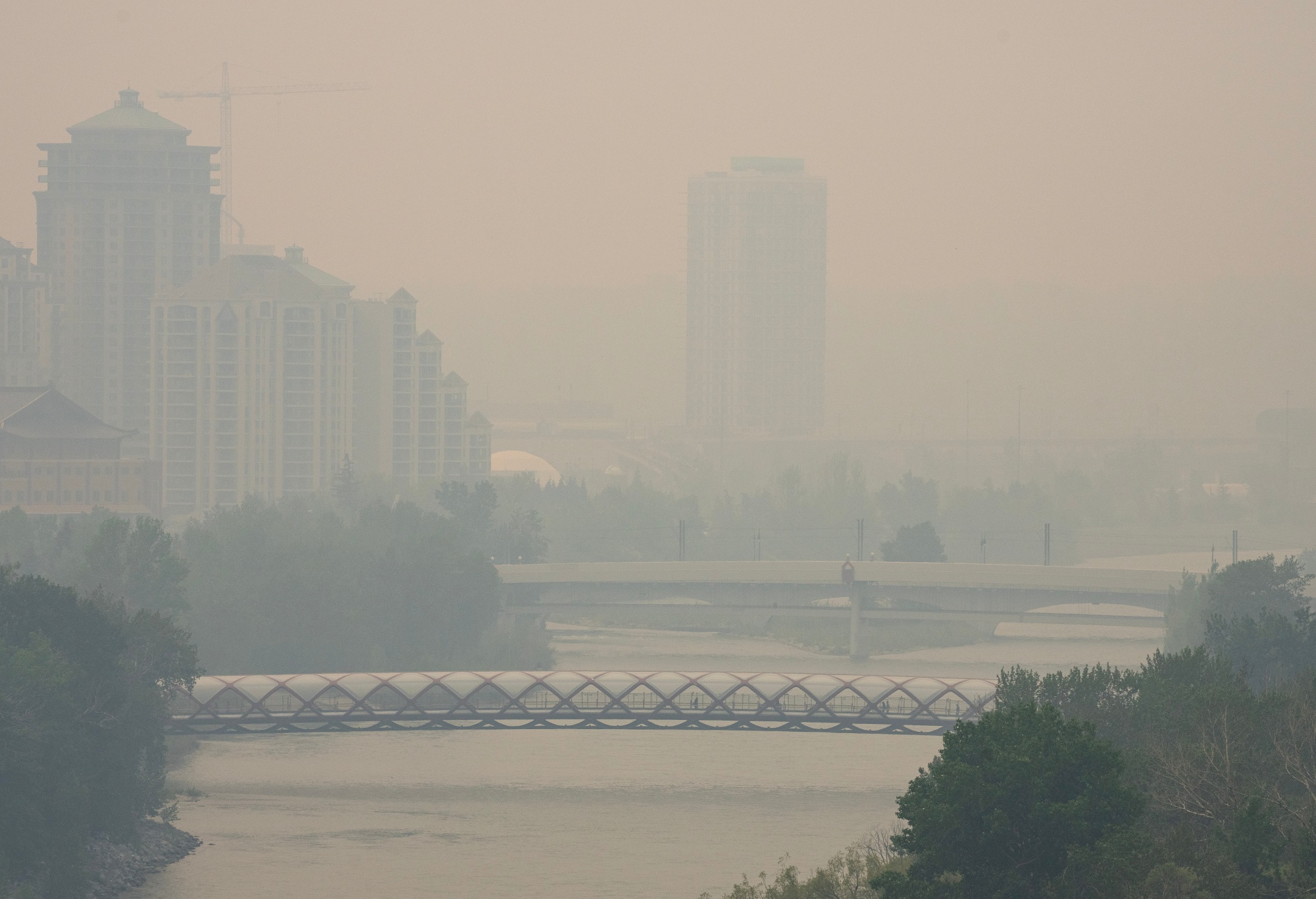
Canada is still fighting wildfires. At least 150 homes are believed to have been burned and another 50 structures destroyed in flames raging across the Halifax area, according to the regional municipality website. So far there have been no injuries in the fires that are currently covering 837 hectares.

As of May 31, 1,819 fires have started this year across Canada consuming 2.8 million hectares. There are 210 actively burning, of which 90 are out of control, according to the Canadian Interagency Forest Fire Centre, the agency created to manage federal, provincial and local resources.

Buildings shrouded in smoke from wildfires in Calgary, Alberta, Canada, on Wednesday, May 17, 2023.  Photographer: Todd Korol/Bloomberg

In the US, flood watches have been posted for parts of Montana, Idaho, Wyoming, Nebraska, Texas and New Mexico as a line of storms crosses the US. The regions have been hit by recent heavy rains and in many areas the saturated soil may have a hard time absorbing more water.

Meanwhile, heat wave conditions are expected in India across Bihar, West Bengal and Sikkim in the next five days, according to the country's meteorological department.

In other weather news today:

Europe: A belt of warmth is forecast to sit over the center of Europe this month, with temperatures expected to climb above seasonal averages from Dublin to Warsaw and cooler weather seen in the Nordic and Mediterranean regions.

Japan: The average temperature in Japan in the three-month period from March through May was the highest since record-keeping began in 1898, Japan Meteorological Agency said in a statement on Thursday. 

No comments:

Post a Comment

Next Africa: A wake-up call

Turmoil has put currencies, stocks and bonds under pressure Read in browser Welcome to Next Africa, a twice-weekly newsletter on where th...