Tuesday, January 3, 2023

What will shape politics in 2023

Balance of Power looks at some of the top political themes of the year.

Welcome back to Balance of Power! We're expecting yet another busy year, with some major ongoing themes but a few emerging trends too. We'll be here to unpick the biggest developments and steer our readers through the political noise around the world.

This list is by no means exhaustive, but here are 10 things worth watching in 2023:

1) Vladimir Putin has very little to show for more than 10 months of war in Ukraine. But that doesn't mean the conflict will end soon. Indeed, as we move past winter, fighting may pick up on the ground, and the race to replenish weapons stocks is key. Right now there's no incentive for Ukrainian President Volodymyr Zelenskiy to negotiate, especially as he insists on the return of occupied territories and Crimea, annexed by Russia in 2014. Will the US press him to do so? Equally there's no apparent reason at home for Putin to try diplomacy — if anything, hardliners may push him to go harder.

2) While US President Joe Biden is heavily engaged in supporting Ukraine, it's clear his long-term priority is the relationship with China. The world's two biggest economies are still struggling to find a way to navigate around each other without colliding. At least they're back talking. China is far more crucial to the global economy than Russia, and its ambitions on Taiwan, a democratically-governed island it sees as its territory, could become a flashpoint that pulls multiple countries in, including the US.

3) Xi Jinping's problems, meantime, are piling up at home. Yes, China's president has cemented himself into power for another term. But having stuck to stringent Covid rules for years, his abrupt reversal has thrown China into chaos with spiraling virus cases and disruption for businesses and supply chains. How long it takes Xi to get his country through the blizzard could have significant ramifications for global economic health this year.

4) Economic statecraft is a term you can expect to hear more about this year. It's not just the US and China, or the US and Russia, either. Numerous countries are deploying trade and regulatory tools (and in some cases military support) to direct their geopolitical aims and influence the behavior of others. It can impact everything from the supply of high-tech chips to global efforts to address climate change. Increasingly we're seeing it extend to access and control of energy supplies, too.

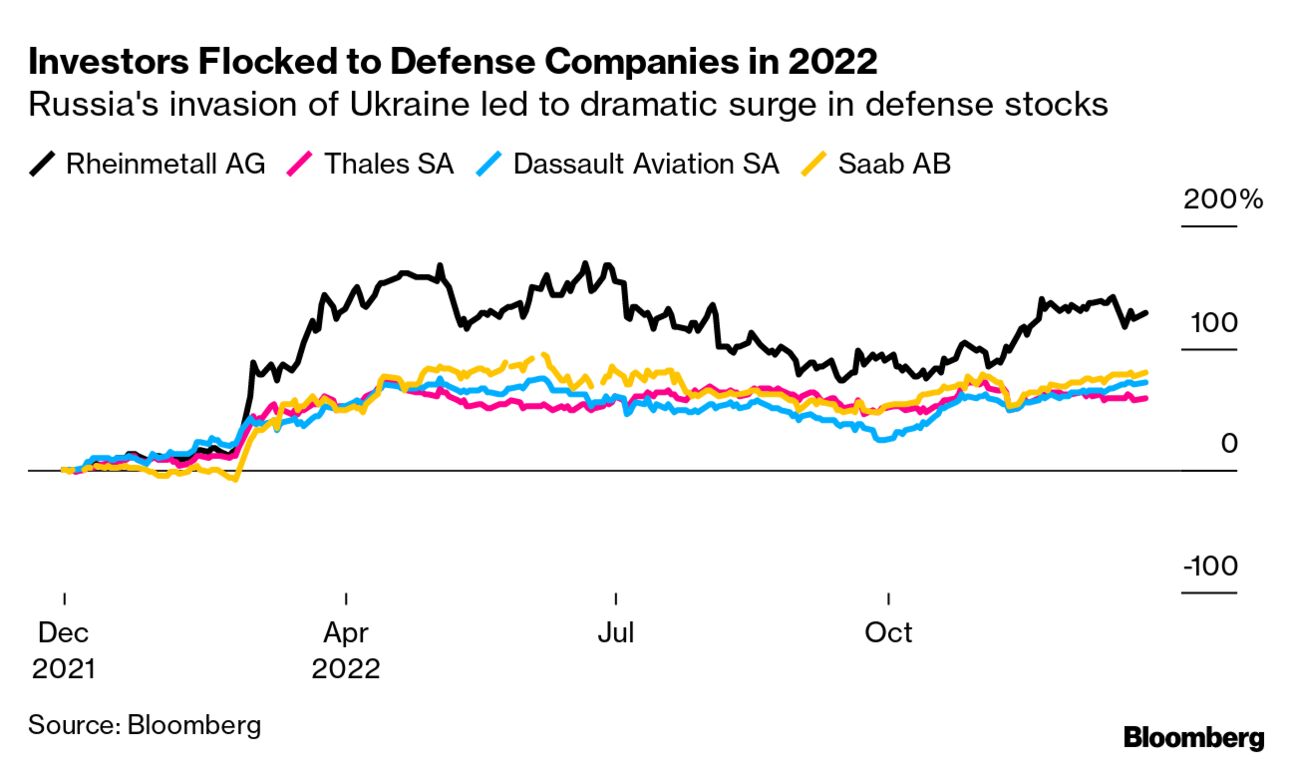
5) Countries around the world are studying the war in Ukraine in real time, assessing what has been effective in terms of military command and control and in weaponry. Humble artillery has shown its mettle when combined with drones, for example. As nations from Japan to Germany increase defense outlays, many may adjust their military spending and structures as a result. It may also lead to a fresh look at the broader machinery of procurement and how quick (or rather, how slow) defense contractors are to ramp up or switch production.

6) North Korean leader Kim Jong Un has been letting off missiles and rockets for months now, prompting warnings from Seoul to Tokyo and the US. And yet he a) has not stopped and b) has not been getting the attention he might usually have expected, with Biden already dealing with Russia and China. So where does Kim go from here? A nuclear test, or does he fire off long-range intercontinental ballistic missiles?

7) We're seeing a new US Congress from today after midterm elections where the Democrats fared better than expected. Even so, they lost control of the House to Republicans. In the run up to the 2024 presidential vote, expect a more divided mood in Congress and squabbles that bog legislation down. While Biden arguably got the bigger parts of his economic agenda through already, there's little wiggle room on Capitol Hill to act further on inflation and debt.

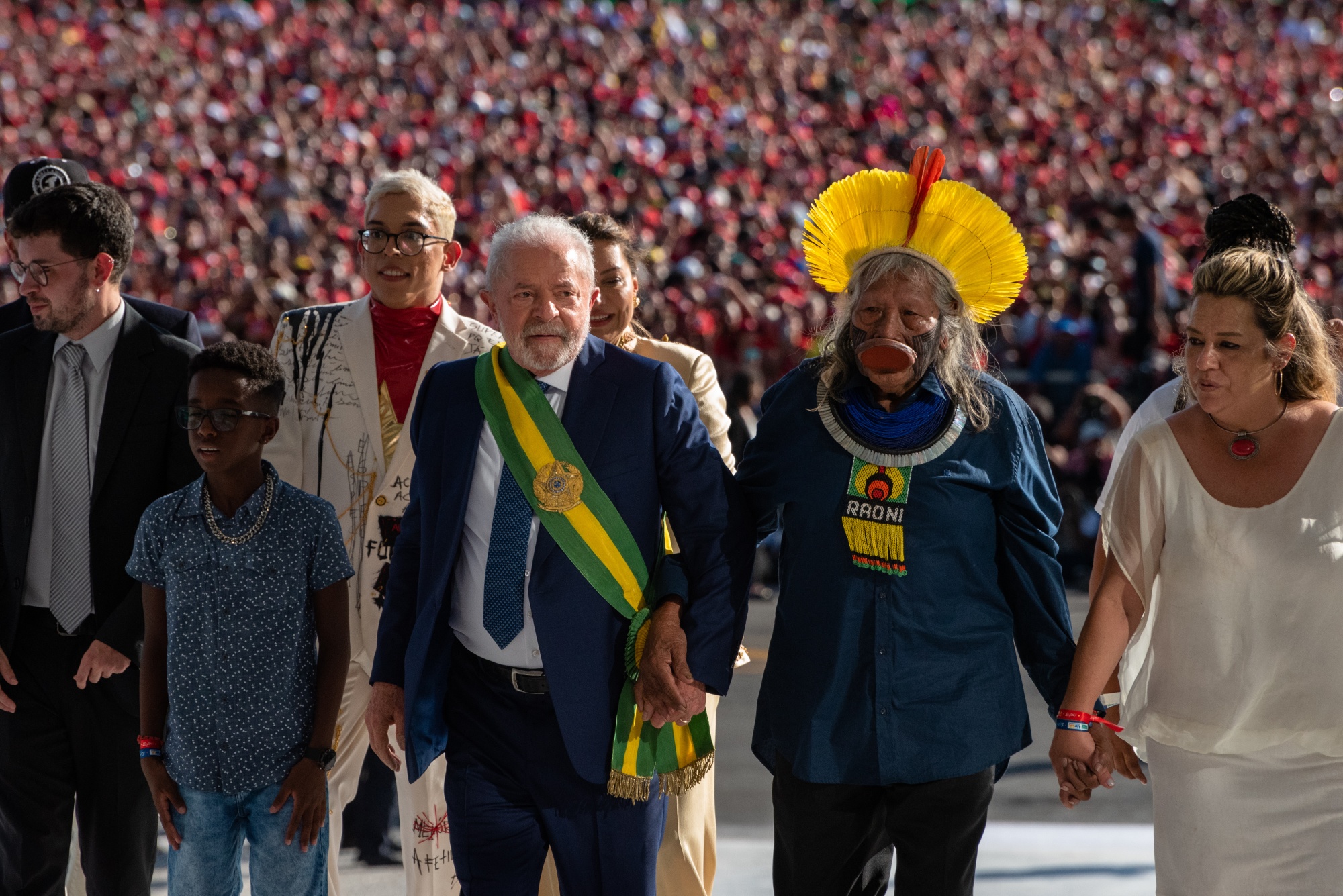
8) Luiz Inacio Lula da Silva has taken office in Brazil, bringing a leftist back to power in the largest Latin American economy. How will he wield that clout? But equally the longevity of what was dubbed a "pink tide" of progressive governments in the region remains in doubt. We saw Pedro Castillo removed in Peru late last year, and there are challenges for others, including Gabriel Boric in Chile, whose popularity is falling. Argentina heads for the polls this year and will be a key election to watch.

9) We're hearing a lot about an increasingly "multipolar world" after decades of US dominance, and that includes an intriguing crop of middle powers coming to greater prominence, building their own alliance structures and playing mediator roles in key issues. Think Turkey (where President Recep Tayyip Erdogan is up for re-election this year), Australia and the UAE, for starters.

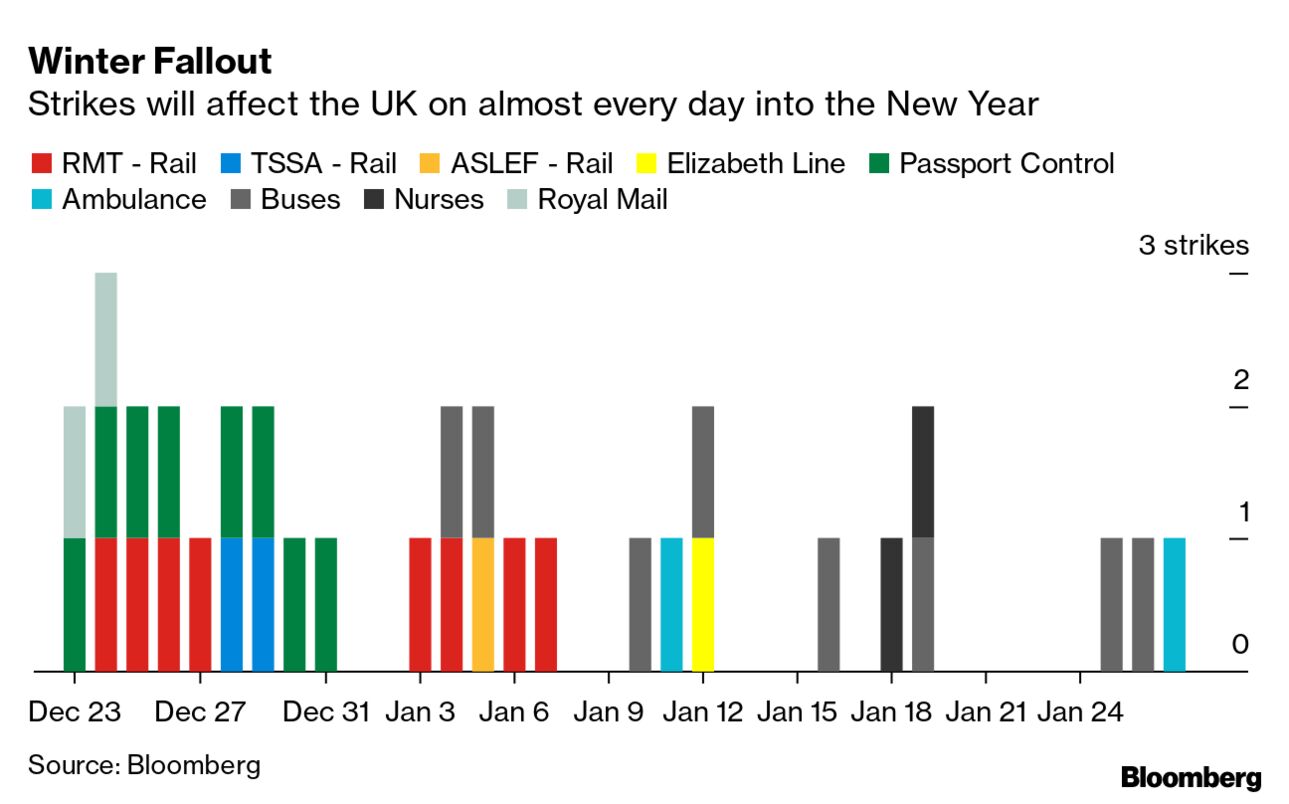
10) Finally, expect to see even more political jostling around "stuff" this year. Access to everything from food to energy, technology and even water will drive economic statecraft, defense spending and government budgets. Inflation and cost of living pressures are still with us. We are likely to get through the current European winter OK, but what about the certainty of gas supplies for the next one? The UK is riven by industrial turmoil. Will we see that elsewhere, too? 

Lula after his inauguration in Brasilia on Sunday. Photographer: Maira Erlich/Bloomberg

Click here to follow Bloomberg Politics on Facebook and if you're enjoying this newsletter, sign up here for this week's most compelling political images.

Global Headlines

Russian losses | A Ukrainian missile strike at the turn of the new year on in the occupied eastern town of Makiyivka killed at least 63 Russian troops in one of the biggest single-incident losses that Moscow has acknowledged in the war. While the Kremlin rarely provides figures — and Ukraine and its allies say it under-reports casualties — prominent Russian bloggers said the death toll may be in the hundreds.

Covid impact | The rapid spread of Covid triggered a plunge in Chinese business and consumer spending in December, sending the economy into a year-end slump and signaling more disruption is likely in the first months of this year. The decline in manufacturing worsened last month, while activity in the services sector plunged the most since February 2020, according to data released over the weekend.

  • China said it would hit back at nations that placed Covid restrictions on its travelers for "political goals."
  • The explosion of cases across China is overwhelming crematoriums, making it hard for anyone to find an open slot and giving families five-to-10 minutes to mourn in no-frills ceremonies.

British rail workers are walking off the job for much of this week, paralyzing transport and adding to troubles for Prime Minister Rishi Sunak's government. Union members will strike for five days starting tomorrow, snarling the usual post-holiday return to work and interrupting January sales that are crucial for retailers.

Divided house | Kevin McCarthy's chances of becoming the speaker of the US House of Representatives are in peril due to opposition from conservatives as Republicans formally take control of the chamber. The turmoil underscores the internal struggle between moderates and hardliners backing the populist agenda of former President Donald Trump.

  • Read about 10 lawmakers with the legislative expertise, political stature, and ability to get things done in a divided Congress.

Best of Bloomberg Opinion

Sunny weather | A warmer-than-expected start to winter across much of the global north is easing fears of a natural gas crisis that had been predicted to trigger power outages and skyrocketing utility bills. Governments were bracing for gas shortages after Russia invaded Ukraine last year, but now forecasts pointing to temperatures above seasonal norms for the next two weeks and reduced consumption have sent gas prices plummeting.

Explainers you can use

Nuclear deterrence | The US is in talks with South Korea to find ways to deter North Korea from using nuclear weapons, a spokesperson for the National Security Council in Seoul said. Biden and his South Korean counterpart Yoon Suk Yeol have asked their teams to plan for a coordinated response to a range of scenarios, including Pyongyang launching weapons.

Bloomberg TV and Radio air Balance of Power with David Westin on weekdays from 12 to 1pm ET, with a second hour on Bloomberg Radio from 1 to 2pm ET. You can watch and listen on Bloomberg channels and online here.

News to Note

  • China's new foreign minister, Qin Gang, praised Americans after stepping aside as Beijing's top envoy to Washington, signaling that ties may be thawing despite recent tensions over Taiwan.
  • The president of the European Parliament said she's started an "urgent procedure" to waive the immunity of two more socialist lawmakers suspected of being part of a sprawling corruption scandal involving Qatar.
  • A majority of Swedes believe their country should continue to abide by its laws in the face of Turkish demands it extradite people Ankara accuses of terrorist links, even if that means delaying its membership in the North Atlantic Treaty Organization, a poll showed.
  • Philippine President Ferdinand Marcos Jr. said his government expects to sign more than 10 agreements with China during his visit starting today, as he seeks to shift ties into "higher gear."
  • Brazilian assets tumbled yesterday in the first session of 2023 as traders digested plans by Lula to use state-owned companies to drive economic growth.

Thanks to the 33 people who answered the Dec. 16 quiz and congratulations to Marc Weinberg. He was the first to name Russia as the country that raised concerns over international sanctions violations by apparently resuming trade with North Korea via a rail link that was suspended for almost three years due to Covid-19.

And finally ... When Sumaira Abdulali began campaigning against noise pollution in India's financial capital Mumbai two decades ago, friends, acquaintances and even her attorneys insisted it was a fool's errand. While her battle in what she reckons is the loudest city in the world brought her into conflict with powerful interests, she has scored victories. Now sound barriers are erected for construction sites, loudspeakers are banned near public buildings and police enforce "no honking" days for motorists.

Abdulali at her home in Mumbai with a decibel meter. Photographer: Catherine Davison for Bloomberg Businessweek

No comments:

Post a Comment

The Next Chapter of DaVinci

Over a decade of innovation led to this moment. Step inside what's next. ͏  ͏  ͏  ͏  ͏  ͏  ͏  ͏  ͏  ͏  ͏  ͏  ͏  ͏  ͏  ͏  ͏  ͏  ͏...