| US and EU consider tariffs to help save the planet. US stocks suffer surprise drop. Japan's yen is poised for an impressive turnaround. Here's what you need to know today. The US and European Union are weighing new tariffs on Chinese steel and aluminum as part of a bid to fight carbon emissions. The move would mark a novel approach, as the US and EU would seek to use tariffs — usually employed in trade disputes — to further their climate agenda. The new framework is mainly aimed at China, the world's biggest carbon emitter and producer of steel and aluminum, as well as other large polluting nations, sources say. But the plan would likely deepen divisions between Beijing and Washington. The world's worst-performing major currency looks poised for an impressive turnaround in 2023 as its two key drivers — a hawkish Federal Reserve and a dovish Bank of Japan — swap places in the eyes of some investors. The yen, which has been a favored short against the dollar for a majority of this year, could rally more than 9% from current levels next year, according to Barclays and Nomura. Meanwhile, the US dollar has erased more than half of this year's gains amid growing expectations the Fed will temper its aggressive rate hikes.  | Professional investors are loading up on bets that an economic recession can be avoided despite all the warnings to the contrary. Money managers have been favoring economically sensitive equities, such as industrial companies and commodity producers, according to a study from Goldman Sachs on positioning by mutual funds and hedge funds with assets totaling almost $5 trillion. The positions amount to wagers that the Federal Reserve can tame inflation without creating a recession. It's a dangerous bet — for a variety of reasons. Asian stocks are poised to fall after US shares dropped following unexpectedly strong services data. Equity futures for Japan and Hong Kong slid following a third day of declines in the S&P 500, which fell 1.8%. Treasury yields climbed and the dollar halted a four-day rout as the economic outlook fueled speculation the Federal Reserve will keep policy tight to tame stubborn inflation. Ambitious plans to build a new capital city in Indonesia are falling apart. Nusantara, rising from the rainforests of Borneo to replace creaky Jakarta, was supposed to be the quintessential modern metropolis, with a $34 billion pricetag. But with just 18 months left in his final term, President Joko Widodo is still aggressively courting international investors to finance 80% of the project he hoped would cement his own legacy. Read our Big Take on Indonesia's struggle here. - Which investor has the best tweets? Is it Cathie Wood, Jeffrey Gundlach or somebody else? In our latest MLIV Pulse survey, we also ask about the outlook for the US economy. Do you agree with JPMorgan and Bank of America's predictions of a mild recession ahead? Share your views here.
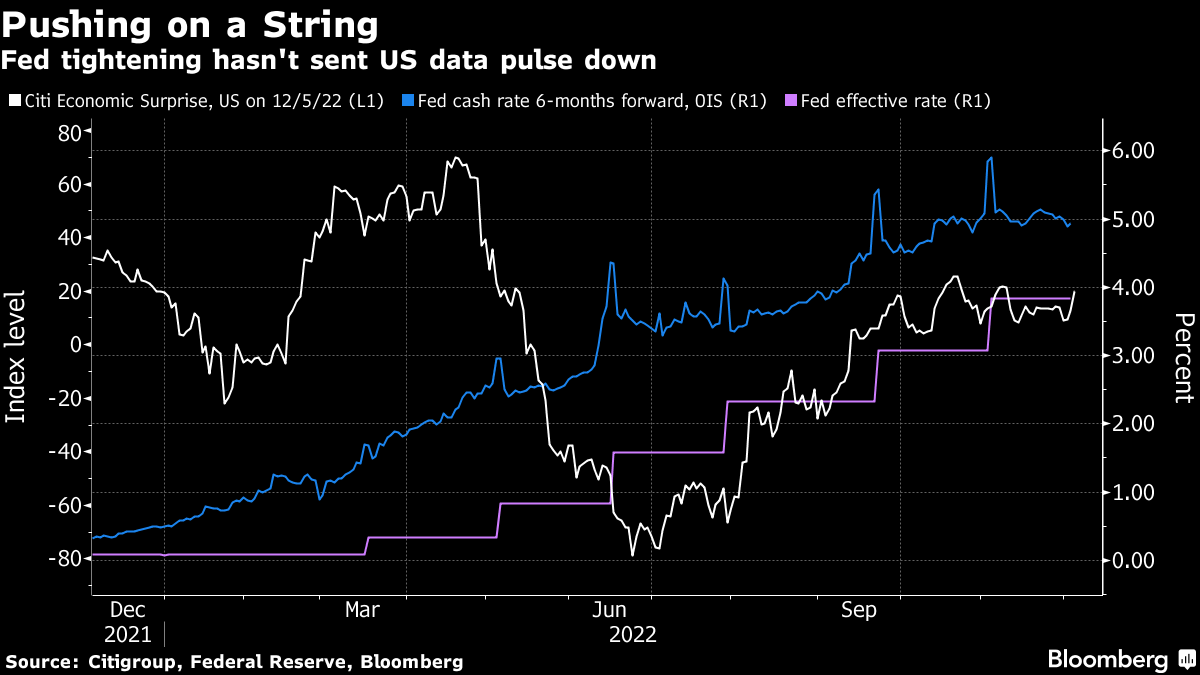
US economic data keep coming in hot, a key reason to be skeptical that the Federal Reserve is about to meaningfully pivot away from its hawkish stance. ISM Services on Monday was the latest example, and this time markets responded. Stocks and bonds tumbled as traders started to price back in even a hint that the Fed would take the cash rate above 5%. That's a level St. Louis Fed President James Bullard for one has said is likely the minimum needed to tame inflation, and his track record so far has been a bellwether for where the Fed ends up going. As Citigroup's surprise gauge underscores, the US economy is defying the Fed's efforts to meaningfully slow it down. As long as that's the case, a policy pivot remains off the table, and any rallies in stocks and bonds are likely to be transitory. Garfield Reynolds is Chief Rates Correspondent for Bloomberg News in Asia, based in Sydney. | 






No comments:
Post a Comment