Crypto's Insecurity Issues
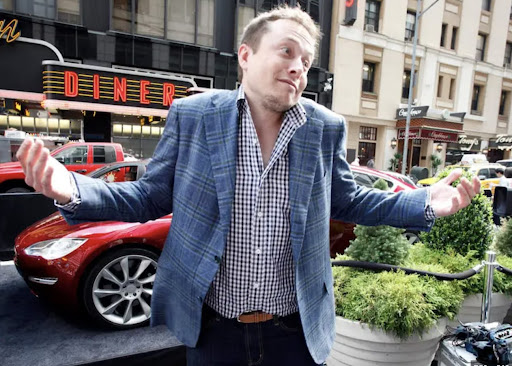
In 2018, the Tesla board awarded Elon Musk an options-based compensation package that, following a 1,000% rally in the stock, turned out to be worth $51 billion.
The award was approved by shareholders, too. And yet, a court may force Elon to give the money back.
A lawsuit filed in 2018 accusing Musk and the Tesla board of corporate waste and "unjust enrichment" came to a week-long trial that ended this month, with the judge's verdict due any time now.
Irrespective of the outcome, this is what makes TSLA a security: Your rights as a shareholder are secured by the legal system — even against your own best judgment.
That may not be the real etymology of "security," I kind of just made it up: The term may in fact go back hundreds of years to when people started offering collateral against loans ("I pledge my house as security against the loan you've given me.")
Or it may stem from the sense of security you get from having a debtor sign a piece of paper (be it a legal document or an IOU) affirming that they owe you money.
But the point is, your rights as a shareholder are secured by law and not by the votes that may or may not come with the shares you own.
In crypto, by contrast, rights are not secured by law. Which means that crypto tokens, in my opinion, are not securities.
Legally, it's of course only the SEC's opinion that matters as to what is or isn't a security.
But if buying a crypto token makes you feel in any way secure, I think you're doing it wrong.
Fight for your right to crypto
Whenever I hear the term "governance token," my Pavlovian response is "zero" — because I come from the stock market and stock market investors put something close to zero value on governance (i.e., voting) rights.
Crypto investors, however, seem to put quite a lot of value on governance and voting rights.
But even in crypto, this is generally explained in stock market terms: Voting rights confer control, and control is tantamount to ownership — so governance rights make owning a token more or less the same as owning a stock.
I don't think that's the right way to look at it, however: Ownership in traditional finance is conferred by the legal claim on current assets and future cash flows that comes with owning a stock or bond.
Giving token holders an ostensibly decentralized say over governance feels like a regulatory end-around way of conferring ownership without having to register as a security.
But I'd argue that's doubly wrong: Having a vote gives the appearance of ownership, without conferring any of the real rights of ownership. And because it appears to be a security, the SEC will say it is a security.
Which makes governance tokens a lose-lose: All the liabilities of a security and none of the rights.
Vitalik takes an even dimmer view of this way of thinking: In a tweet this morning, he called assigning value to governance rights "pathological."
I'm not quite as high-minded as Vitalik: If I think the potential to twist a protocol toward special interests is going to make a token go up, I'm not above buying it.
That is more or less the value proposition of the Curve token, which attracts buyers by assigning them the right to direct token issuance according to their own special interests.
This, to me, confers real value by conferring real rights — it's just replacing legal rights with smart contract rights.
More conventionally, the GMX token is an example of a protocol where holders who stake their tokens have a traditional-looking claim on future cash flows — not because token holders have voting rights, but because their claim is hard-coded in the protocol's smart contracts.
Tokenomics like Curve's are often derided by critics as "ponzinomics." And paying cash flows to stakers is often dismissed as regulatory arbitrage.
In most cases, the critics are correct.
More charitably, however, I think efforts like those of CRV and GMX can be seen as early attempts to find all-new ways of doing things — which, per Jeff Bezos, is more productive than trying to simply do old things a little bit better.
In crypto, mimicking the old TradFi way of voting mostly results in empty governance: The vote that comes with most crypto tokens is simply a signaling device, whereby token holders signal to the signers of a multisig what they would like to see happen.
(A "multisig" is a digital wallet that gives a small group of signers control over the assets and parameters of a protocol.)
But those multisig signers have no legal responsibility to do what token holders ask them to do.
In fact, they have no legal responsibilities at all: If they chose to vote themselves, say, a $51 billion bonus, they are perfectly free to do so — the only court that could possibly make them reverse the decision is the court of public opinion.
Which is one reason why buying a crypto token should in no way make you feel secure.







No comments:
Post a Comment