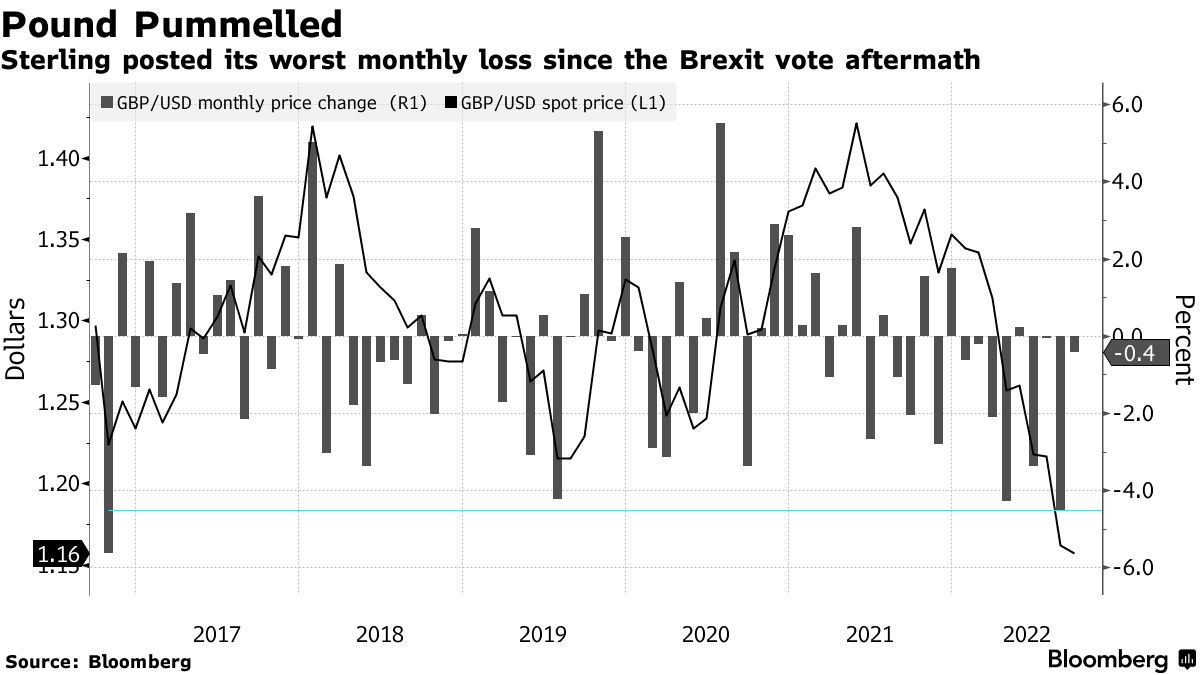
| Today brings a triple helping of financial trouble: the continued collapse in the value of sterling, the fall of domestic stocks and borrowing costs for British firms going past 5% for the first time in a decade. Amid the maelstrom, the final Tory leadership hustings last night could have seen Liz Truss slink quietly towards the finish line. Instead she made two more wham-bam, bold-as-brass commitments. Asked if she would make a "read my lips" promise not to raise taxes she said, very clearly: "Yes. No new taxes."  Liz Truss. Photographer: Hollie Adams/Bloomberg Most divisive, however, was her decisive opposition to the idea of rationing energy this autumn. Commentators asked whether ad hoc blackouts were truly better than rationing, which despite its uncomfortable label describes a slightly more orderly hierarchy of energy needs. Perhaps it jars with a leadership candidate adamant that she offers hope, not austerity. The background music is not pleasant. As Joe Easton and Matthew Musindi report, UK domestic stocks fell for a ninth day — putting them on course for their worst run of losses since the outbreak of Covid19. The FTSE 100 index is laden with exporters (and is outperforming as a result), but the real woes are to be found in the FTSE 250, the midcap index that includes many well-known UK firms. It is "being weighed down by an escalating cost of living crisis, a tumbling pound and lingering political uncertainty," Joe and Matthew write. Elsewhere, the outlook is no easier on the bond markets. Borrowing costs for blue-chip British companies have risen past 5% — a key threshold — for the first time in more than a decade. Runaway inflation is "hammering" the country's corporate sector, our reporters note. And with sterling posting its worst monthly performance since the 2016 Brexit vote, forecasts show it is now morphing into a danger to UK economy, raising the cost of imports and further fueling inflation. Bloomberg's market strategist Simon White says the prospect of the pound hitting parity versus the dollar is becoming ever less outlandish. Dealing with all this will be down to Kwasi Kwarteng, an avid Bloomberg Terminal user who looks nailed on to be Truss's chancellor if she wins. In a profile today, Adrian Wooldridge isn't sure whether even the effervescently clever Kwarteng can meet the scale of the challenge. "Placed in the right context, Kwarteng's obvious qualities — his powerful intellect and his big personality — could become a valuable asset. Set in the wrong one — blinkered leadership and dim-witted colleagues — the very same traits could drive the country over the edge with remarkable speed."
Soon the wait will be over. As of next Tuesday, rather than hearing what a candidate won't do, we'll learn more of what they will. | 









No comments:
Post a Comment