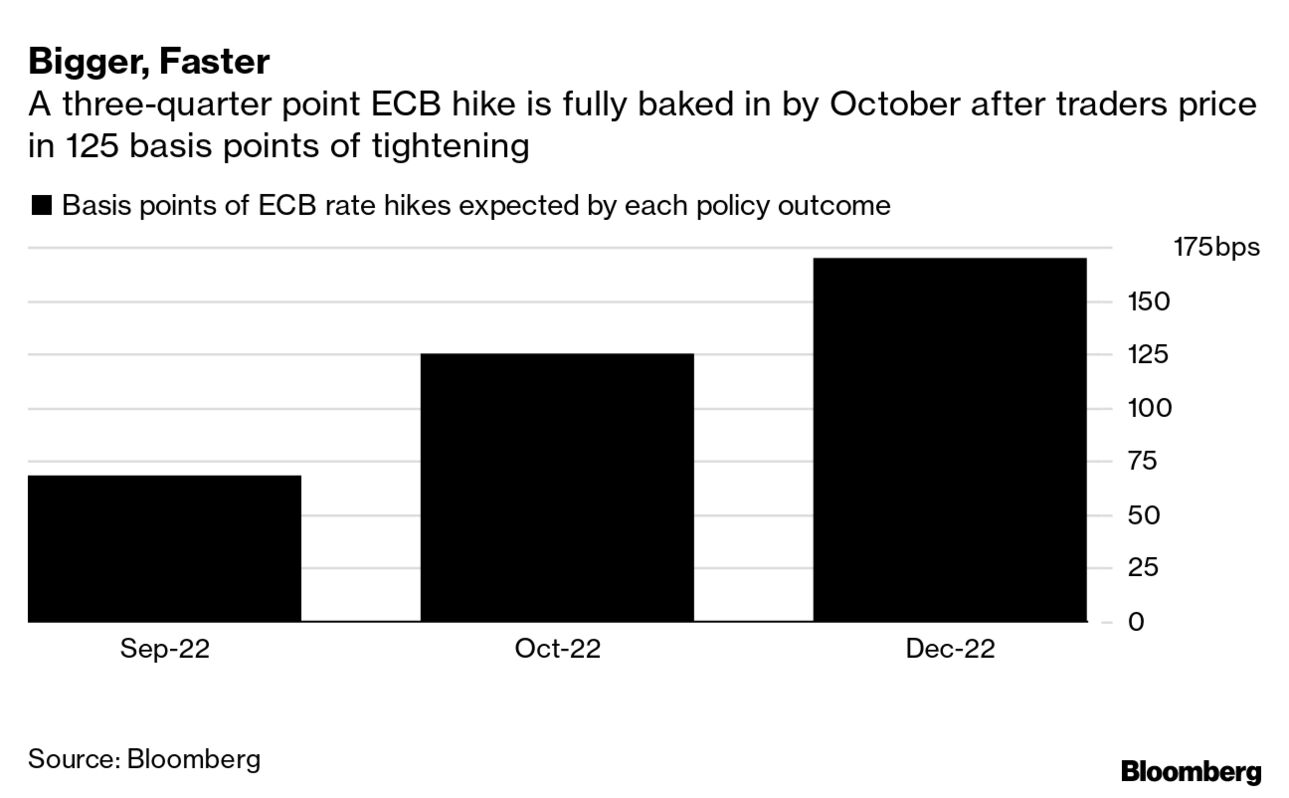
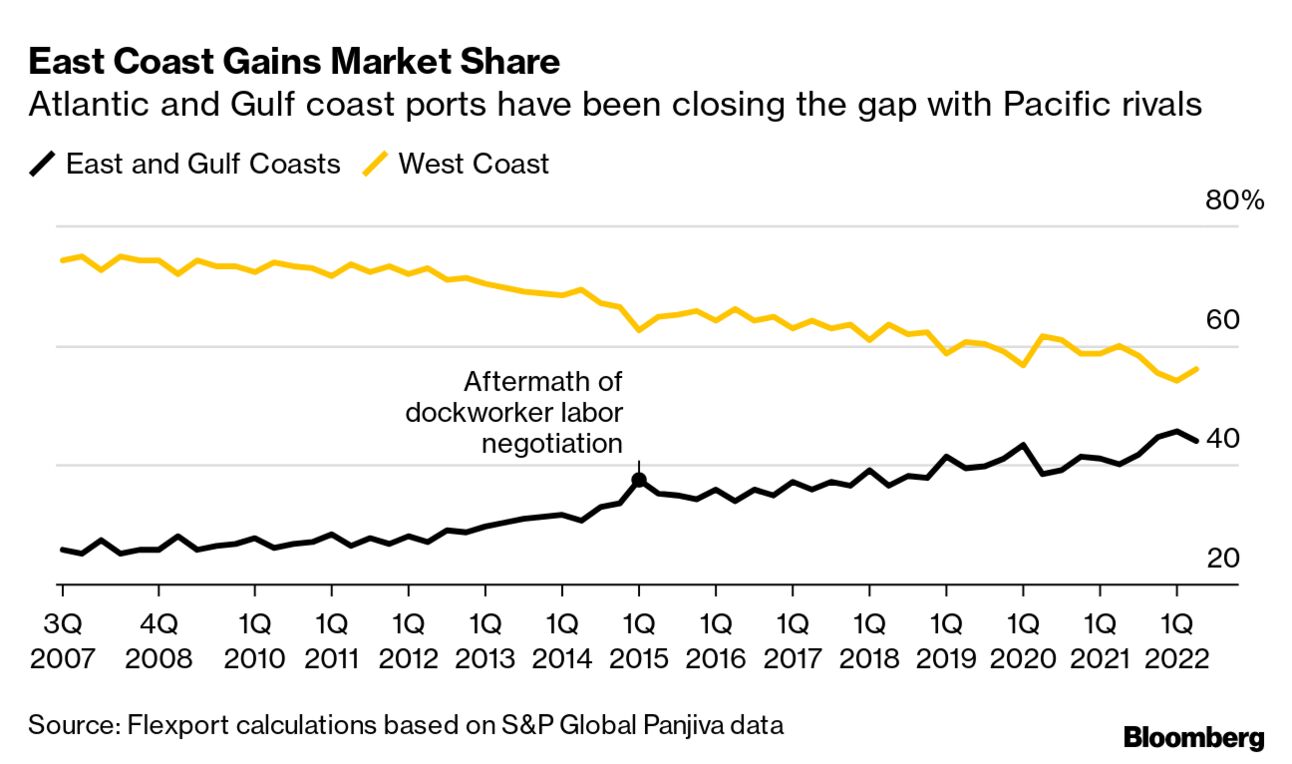
| Hello. Today we look at what the state of the world's factories means for the global economic outlook, an East-West port rivalry in the US and where things stand on the shifting inflation picture. The European Central Bank looks increasingly likely to join the club of jumbo interest-rate hikers. President Christine Lagarde and colleagues meet a week today, but Wall Street's economists and traders are already betting they will tighten with a 75 basis-point increase for the first time ever. The shift in sentiment followed Wednesday's news that inflation in the euro-area reached an all-time high of 9.1% in August. That was more than forecast and way above the central bank's 2% target. Also changing the mood is the drumbeat of commentaries from policy makers. German Bundesbank President Joachim Nagel is calling for a "strong rise in interest rates in September, while his Austrian colleague Robert Holzmann says that there's "no reason to show any kind of leniency." That's in keeping with last week's call from Executive Board member Isabel Schnabel "to act forcefully." Some seem a little less hawkish, meaning a 75 basis-point hike is still not quite a done deal. Bank of France Governor Francois Villeroy de Galhau said the ECB should act in "determination but in an orderly and predictable way." Chief Economist Philip Lane urged a "steady pace" of hikes. To some extent, Lagarde and her colleagues have an even tougher job than the Federal Reserve. The euro-area has a war on its border which is forcing up energy prices that then act as a driver of inflation and a brake on demand. A recession looks to be more likely in Europe than the US, while a sliding euro, political problems in Italy and debts around the periphery also complicate the job of policy makers. Supply-chain obstacles are forcing US retailers to rewire their shipping routes. As Jeannette Neumann and Augusta Saraiva explain here, the early winners are East and Gulf Coast ports, which are taking business from rivals out West at the fastest pace in at least two decades. Some of the gains, executives say, might be permanent. The number of inbound containers arriving at eastern ports rose about 9% in the first half of the year compared with the same period in 2021, and volumes through Houston — the Gulf Coast's leading container port — were up 22%, according to the National Retail Federation. By contrast, imports through the West Coast were down 0.1%. - Factory flops | The weight of the world's problems is being felt on factory floors, with the latest purchasing managers index data showing a pretty bleak production outlook.
- Satellites, shopping | Chinese consumers are still not in the mood to spend, with e-commerce demand especially weak, satellite data show.
- Party people | China's Communist Party congress next month could set up an overhaul of the country's top economic roles at a crucial time.
- 'Friendly' FX | Russia may buy as much as $70 billion in yuan and other "friendly" currencies to slow the ruble's surge, before shifting to a longer-term strategy of selling China's currency to fund investment.
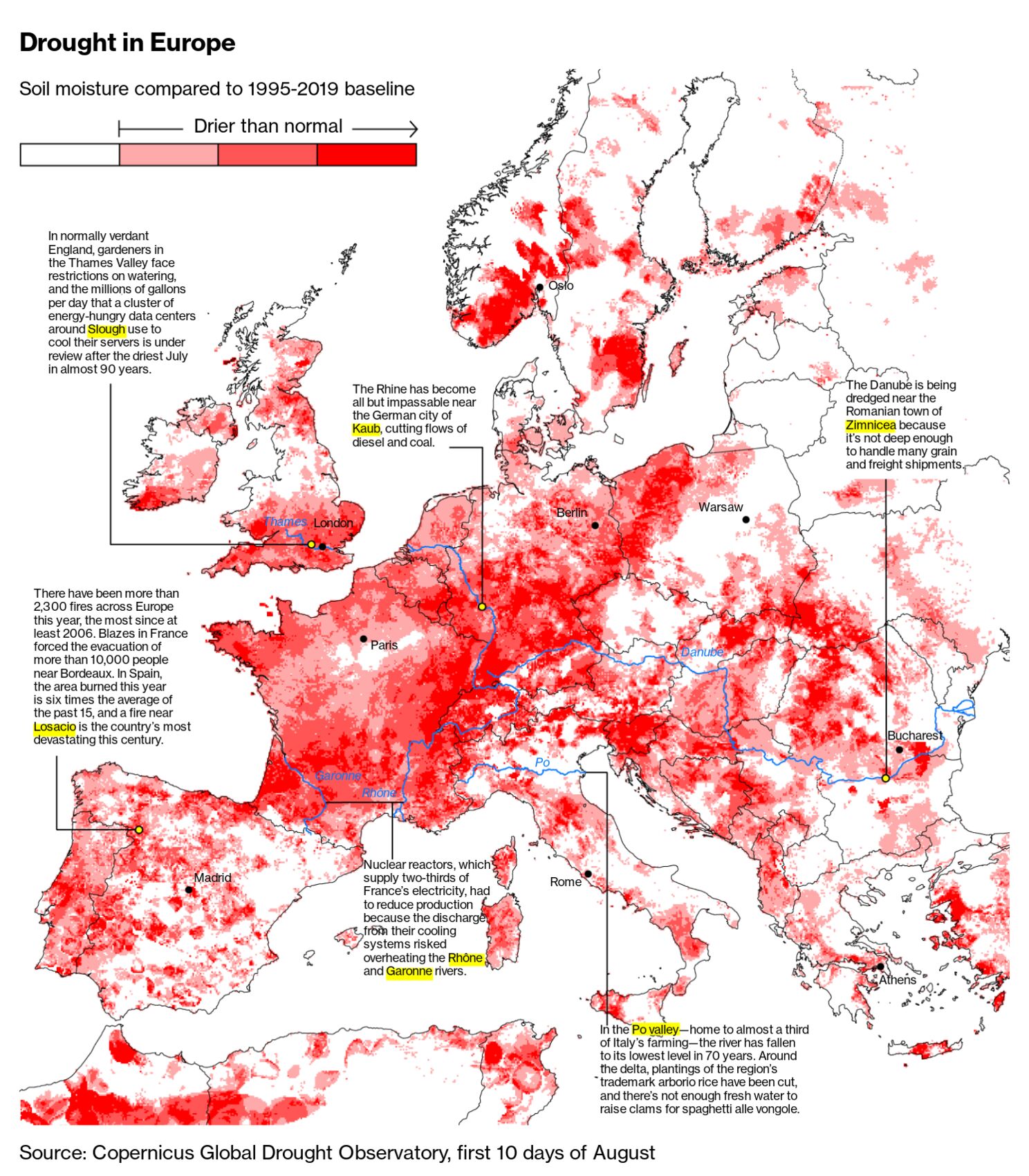
- European heatwave | Almost two-thirds of the region is under a drought warning or alert, wreaking havoc on broad sectors of the economy.
- 'Land of Smiles' | Thailand entered a fresh race to court global talent with the launch of a 10-year visa, on the heels of similar announcements out of Singapore and United Arab Emirates.
- Cost shock | Britons are set for the biggest squeeze on living standards in a century unless the next prime minister delivers tens of billions pounds of additional support, according to new analysis.
- IMF rescues | Sri Lanka reached a staff-level agreement with the International Monetary Fund for a $2.9 billion loan, while Zambia won approval for a $1.3 billion support package.
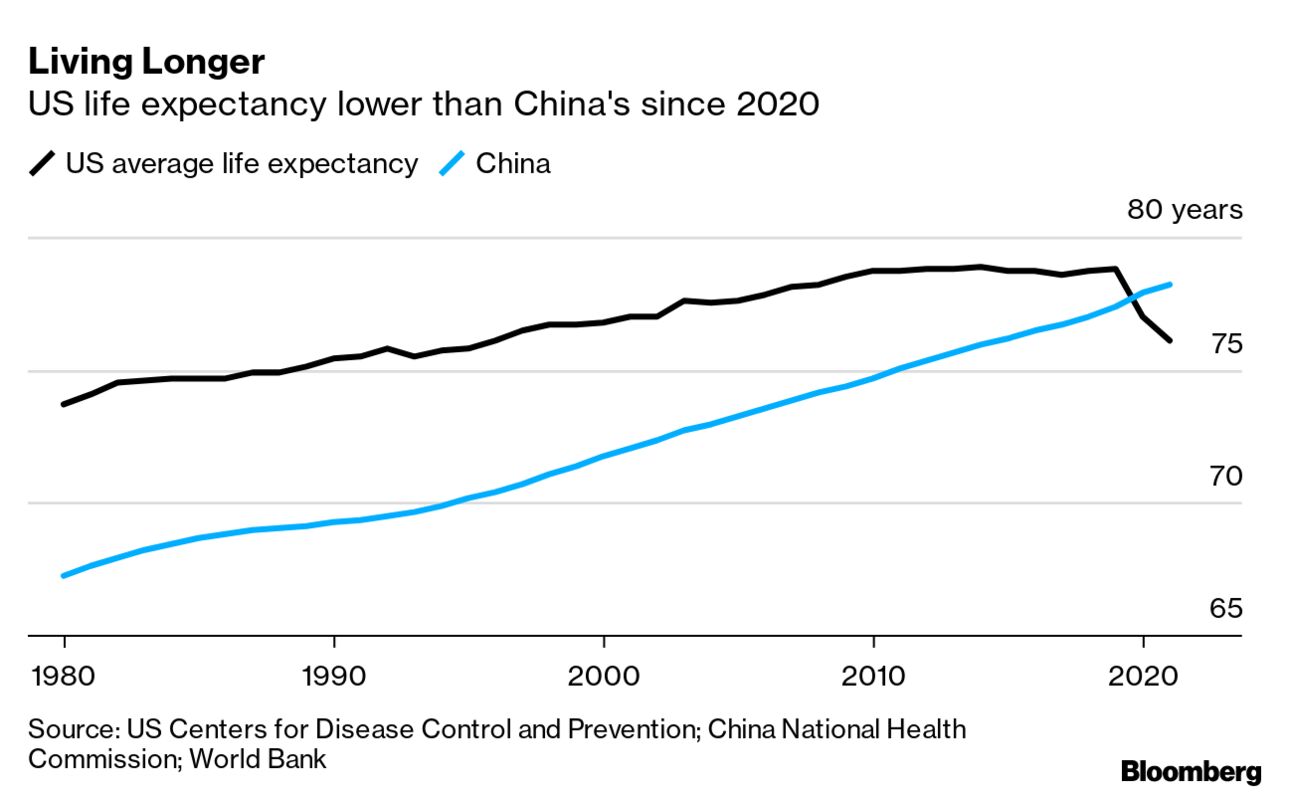
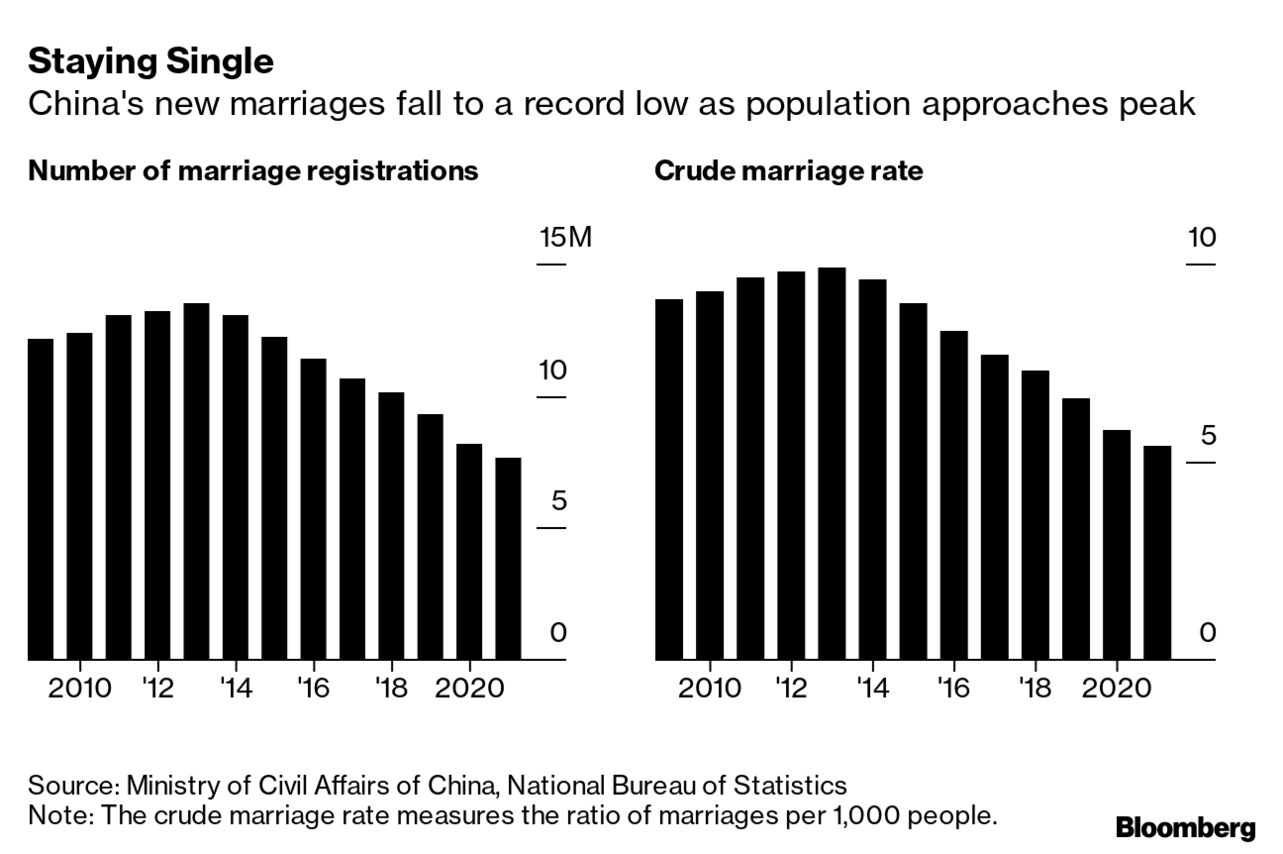
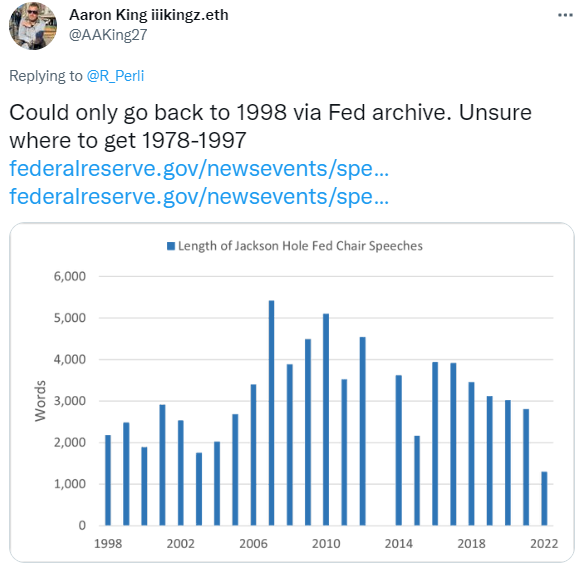
China's demographics are on the turn. Average life expectancy in the US was lower than in China for the second straight year in 2021, with the gap widening to 2.1 years, according to official data. Meantime, new marriages plunged to the lowest level on record last year with some 7.6 million such unions registered in 2021, according to figures recently released by the Ministry of Civil Affairs. That is the lowest dating back to 1985, when records began. More on the length of Federal Reserve Chairman Jerome Powell's speech… Read more reactions on Twitter | 







No comments:
Post a Comment